Cross-border estates and wills — what courts and banks require
Settling an estate that spans two countries needs two parallel document sets: proof of death and heirship, and authority to deal with the assets. Both must be certified in the form the destination court or bank accepts.
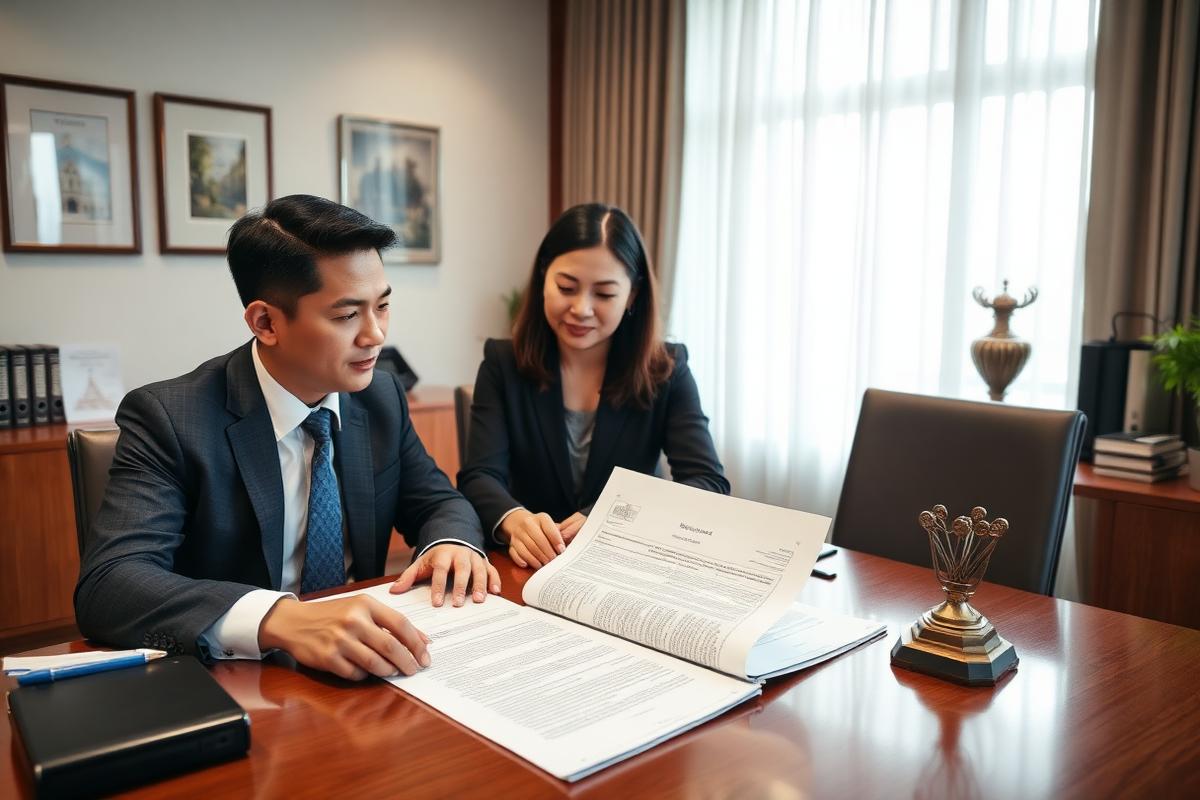
Documents to prepare
- A freshly issued certified death certificate
- House registration showing the deceased has been removed
- Marriage certificate, heirs' birth certificates or other proof of relationship
- The will, if any, with the certification used in the country where it was made
- A court order appointing an estate administrator, where required
- An asset list: bank books, title deeds, share certificates
Step-by-step procedure
1. Split assets by jurisdiction
Thai and foreign assets follow different procedures.
2. Gather proof of death and heirship
Freshly issued registrar copies are verifiable.
3. Translate and certify per destination
Thai courts require Ministry of Justice registered translators; foreign courts use their own system.
4. Apply for an administrator appointment
A Thai filing includes a petition with the list of heirs and assets.
5. Approach banks and registries
Each has its own forms; request their requirements in writing.
Pitfalls that get documents rejected
- Most banks release nothing until an administrator is appointed by the court.
- A foreign will must be certified at origin before it can be used in Thailand.
- Inconsistent spellings of heirs' names require additional linking documents.
- Estates involve many documents at once — allow for queue times.
Advisory notes from our team
- A one-page asset schedule speeds up both lawyer and bank review.
- Get the bank's document list in writing before translation starts.
- Order several certified copies; institutions often retain originals.
An advisory team, not just a filing agent
NYC Visa & Translation has handled cross-border documentation for over 15 years. Every case starts with the destination requirement — who receives the document, in what form, and under which certification route — before we sequence the work so it is done right the first time.
Frequently asked questions
A foreign national died leaving assets in Thailand — where do we start?
Start with proof of death usable in Thailand: the death certificate, translated and legalised through the proper chain. Then inventory the Thai assets — bank accounts, condominium units, vehicles, shares in Thai companies — because each type unlocks differently. Banks and the Land Department generally require a court order appointing an estate administrator before any transfer or withdrawal, so plan the administrator application early rather than after the paperwork is assembled.
Does a foreign will govern Thai assets?
Administration of assets situated in Thailand runs through Thai law and the Thai courts. A foreign will may be produced as evidence, but it must be legalised through the proper chain and translated into Thai, and the court assesses its validity under the applicable rules. People holding assets in two countries therefore often make a separate will covering the Thai assets, drafted so the two do not inadvertently revoke each other. Take legal advice before drafting.
How should foreign documents be prepared for a Thai court?
Foreign documents — death certificate, marriage record, heirs' birth certificates, certificates of heirship — are normally certified in the country of origin under that country's rules, then legalised at the Royal Thai Embassy or through the Department of Consular Affairs, and finally translated into Thai by a translator who takes responsibility for the translation. Every stamp and signature must be legible, because the court examines the continuity of the certification chain above all else.
Must heirs living abroad travel to Thailand?
For many steps, heirs abroad can appoint a representative in Thailand by power of attorney. The document must be signed before an officer competent to certify it in that country, such as a notary public, and then certified at a Royal Thai Embassy or Consulate-General. Some stages may still require the petitioner to appear before the court, so book travel after the hearing date is known rather than before.
Where do these matters usually stall?
Most often on mismatched names and dates of birth between the deceased's papers and the heirs' papers, especially in older documents with different transliterations. Next, a broken certification chain — certified abroad but never legalised in the way the court or bank requires. Third, translations that omit stamps or marginal notes. Verify the chain layer by layer before filing anything.
What can your team do?
We manage the full document chain: identifying what each asset class requires, coordinating retrieval of foreign records, translating and legalising so the chain stays unbroken, preparing powers of attorney for heirs abroad, and liaising with counsel for the court petition. With more than 15 years handling cross-border document work, our advisers set out the fastest viable order before any money is spent.
Continue in this cluster
Prefer not to run the queues yourself? We handle it end to end.
Prefer not to handle the queues yourself, or worried about a rejection? Send us photos of your documents for a free pre-check. We handle the full chain — obtaining certified copies, translation, certification and submission — and keep you updated at each step. Reach us on LINE, phone or email during business hours.