ข้ามไปเนื้อหาหลัก / Skip to main content
N
NYC Visa.
Visa & Translation
Case studies

Cross-border estates and heirship documents — case studies

Real engagements published with client permission, including the document timeline step by step.

These pages describe our actual working process using material the client permitted us to publish. Decisions rest with the receiving authority in each case, so no approval outcome is guaranteed.

Cross-border estate and inheritance

individual

Situation

Heirs in Thailand had to file with a foreign court and bank to transfer assets of a decedent holding both Thai and overseas accounts.

What we checked

  • Completeness and validity window of originals
  • Name consistency across every document
  • Latest requirements of the receiving authority

Supporting documents

  • Freshly issued originals
  • Passport / Thai ID
  • Power of attorney where we act on the client's behalf

Work timeline

  1. Case assessment and document plan

    An adviser confirms the destination rules and sequences the work

  2. Retrieve or reissue the originals

  3. Certified translation with two-step review

  4. File for certification or legalization via the correct channel

  5. Hand over with guidance on using the set abroad

Process notes

Our advisers track status daily and confirm each milestone to the client in writing.

What we delivered

Assembled heirship records, the court order and a power of attorney, all certified and legalized to the destination requirements.

estate-inheritance

Service Knowledge Base

Cross-Border Estate & Probate Knowledge Base

Common questions on estates spanning two countries: wills, estate administrators, and what courts and banks require. (8+ search topics covered)

Where do these matters usually stall?

Most often on mismatched names and dates of birth between the deceased's papers and the heirs' papers, especially in older documents with different transliterations. Next, a broken certification chain — certified abroad but never legalised in the way the court or bank requires. Third, translations that omit stamps or marginal notes. Verify the chain layer by layer before filing anything.

Must heirs living abroad travel to Thailand?

For many steps, heirs abroad can appoint a representative in Thailand by power of attorney. The document must be signed before an officer competent to certify it in that country, such as a notary public, and then certified at a Royal Thai Embassy or Consulate-General. Some stages may still require the petitioner to appear before the court, so book travel after the hearing date is known rather than before.

How should foreign documents be prepared for a Thai court?

Foreign documents — death certificate, marriage record, heirs' birth certificates, certificates of heirship — are normally certified in the country of origin under that country's rules, then legalised at the Royal Thai Embassy or through the Department of Consular Affairs, and finally translated into Thai by a translator who takes responsibility for the translation. Every stamp and signature must be legible, because the court examines the continuity of the certification chain above all else.

Does a foreign will govern Thai assets?

Administration of assets situated in Thailand runs through Thai law and the Thai courts. A foreign will may be produced as evidence, but it must be legalised through the proper chain and translated into Thai, and the court assesses its validity under the applicable rules. People holding assets in two countries therefore often make a separate will covering the Thai assets, drafted so the two do not inadvertently revoke each other. Take legal advice before drafting.

A foreign national died leaving assets in Thailand — where do we start?

Start with proof of death usable in Thailand: the death certificate, translated and legalised through the proper chain. Then inventory the Thai assets — bank accounts, condominium units, vehicles, shares in Thai companies — because each type unlocks differently. Banks and the Land Department generally require a court order appointing an estate administrator before any transfer or withdrawal, so plan the administrator application early rather than after the paperwork is assembled.

What can your team do?

We manage the full document chain: identifying what each asset class requires, coordinating retrieval of foreign records, translating and legalising so the chain stays unbroken, preparing powers of attorney for heirs abroad, and liaising with counsel for the court petition. With more than 15 years handling cross-border document work, our advisers set out the fastest viable order before any money is spent.
Topics covered
เอกสารประกอบ: ใบมรณบัตร · พินัยกรรม · แปลรับรอง · นิติกรณ์
มรดกข้ามประเทศ: ผู้จัดการมรดก · คำสั่งศาล · ทายาทโดยธรรม · ทรัพย์สินในไทย

Need your documents reviewed or your case assessed? Ask our team by phone, LINE, or email. We reply during business hours (Mon–Fri 9:00–18:00, Sat 9:00–15:00, ICT).
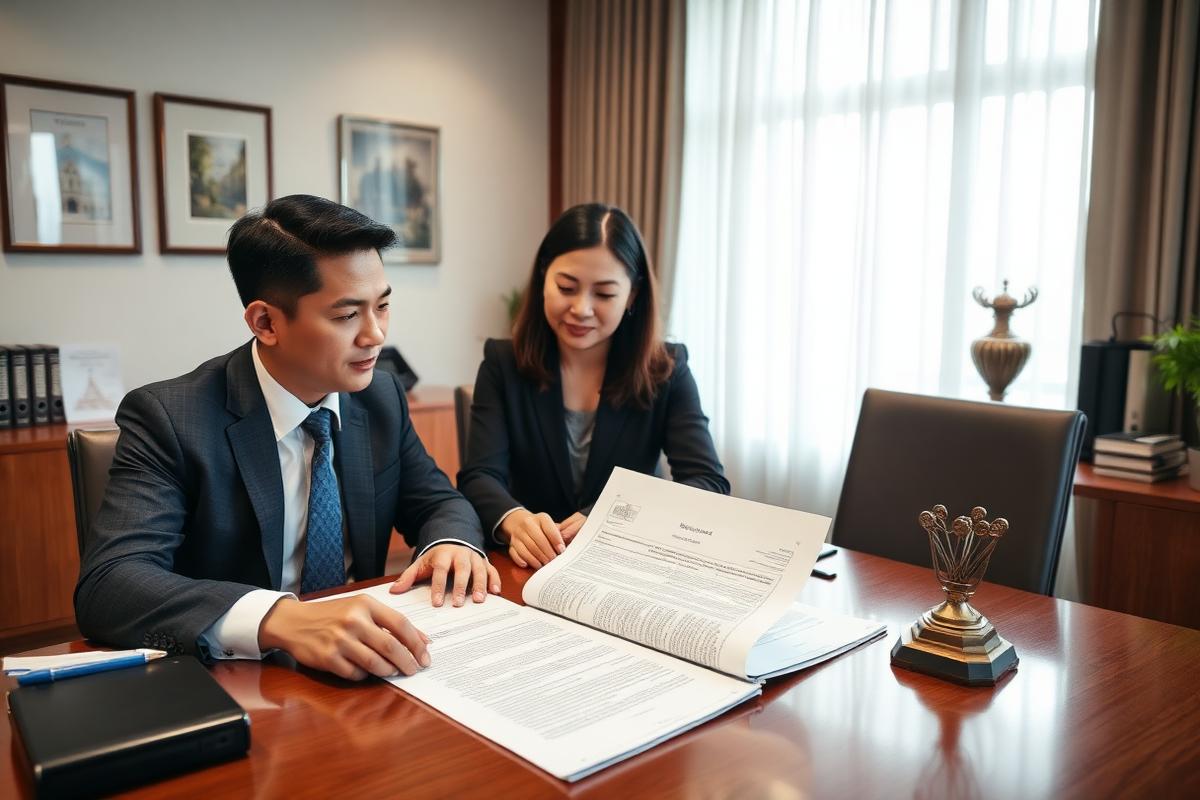
Lawyer advising a client on cross-border estate and will documents
Lawyer advising a client on cross-border estate and will documentsFrom actual casework by the NYC Visa & Translation team
Service Playbook

Cross-border estates and wills — what courts and banks require

Settling an estate that spans two countries needs two parallel document sets: proof of death and heirship, and authority to deal with the assets. Both must be certified in the form the destination court or bank accepts.

Documents to prepare

  • A freshly issued certified death certificate
  • House registration showing the deceased has been removed
  • Marriage certificate, heirs' birth certificates or other proof of relationship
  • The will, if any, with the certification used in the country where it was made
  • A court order appointing an estate administrator, where required
  • An asset list: bank books, title deeds, share certificates

Step-by-step process

  1. 1. Split assets by jurisdiction Thai and foreign assets follow different procedures.
  2. 2. Gather proof of death and heirship Freshly issued registrar copies are verifiable.
  3. 3. Translate and certify per destination Thai courts require Ministry of Justice registered translators; foreign courts use their own system.
  4. 4. Apply for an administrator appointment A Thai filing includes a petition with the list of heirs and assets.
  5. 5. Approach banks and registries Each has its own forms; request their requirements in writing.

Pitfalls and rejection causes

  • Most banks release nothing until an administrator is appointed by the court.
  • A foreign will must be certified at origin before it can be used in Thailand.
  • Inconsistent spellings of heirs' names require additional linking documents.
  • Estates involve many documents at once — allow for queue times.

Tips from our team

  • A one-page asset schedule speeds up both lawyer and bank review.
  • Get the bank's document list in writing before translation starts.
  • Order several certified copies; institutions often retain originals.

Prefer not to handle the queues yourself, or worried about a rejection? Send us photos of your documents for a free pre-check. We handle the full chain — obtaining certified copies, translation, certification and submission — and keep you updated at each step. Reach us on LINE, phone or email during business hours.

Route Comparison

Cross-border estates: Thai court appointment vs foreign process

Assets in different countries need instruments each jurisdiction accepts; sequencing avoids duplicated work.

RouteWhen to useCertifying authorityApprox. durationRejection risk
Petition a Thai court for an estate administratorAssets or registered rights are located in ThailandThe competent court, plus land office or banks by asset typeVariable with court schedules and heir complexityForeign death certificates or wills not legalised and translated to court standard
Use a foreign grant, then legalise it for use in ThailandThe main probate already runs abroadThe foreign court/authority plus consular legalisationVariable — allow several weeks for cross-border certificationSome foreign orders are not directly binding and still need a Thai step
Power of attorney to a representative in ThailandHeirs cannot travelThai mission or a notary abroad, then legalisation in ThailandVariable with the foreign certification chainPowers drafted too narrowly block specific transactions and must be redone

Timelines above are practical estimates from live casework and can change with each authority's policy; confirm with the receiving authority before you plan. If you would rather not test routes by trial and error, our advisers (15+ years of casework) can assess your case and handle the whole chain for you.

Advisory Service

We do not just process documents — we advise you through the whole case

Our team has worked on cross-border documents, certified translation and government liaison for over 15 years. Most rejections we see are not caused by missing paperwork but by choosing the wrong route on day one, so we always start with a case assessment.

Route assessment

We look at your destination, purpose and deadline, then tell you which certification route applies — and which steps you can skip.

Pre-submission review

Name spelling, consistency across documents, document age and translation format are checked before anything reaches a counter.

Timeline planning

We sequence the steps around your appointment or travel date and flag bottlenecks in advance.

Rejection recovery

We read the refusal reasons, identify the underlying cause, and plan a resubmission that answers what the authority asked for.

Rather not learn by trial and error? Send your case details and document photos for a review — reach us on LINE, phone or email during business hours.

Practical Q&A

Practical questions · Near me / DIY / Required documents

Is there a service point near me?

Our main offices are Lat Phrao 95 (Bangkok), Khon Kaen and Udon Thani. We serve the whole country through scans and document courier, and can meet at city rail stations or malls. Ask our team by phone, LINE or email for the most convenient option.

Can I handle this myself?

Many steps can be done personally under the relevant authority's rules. What usually costs time is the wrong sequence, a translation format that does not match the requirement, or a source document version the recipient will not accept. Check the destination checklist before starting and ask us if anything is unclear.

Which documents should I prepare?

Generally the original document from the competent authority, the owner's ID or passport, a translation in the format the destination requires, and a power of attorney if someone acts for you. Details vary by service type — ask our team for a case-specific checklist.
Practical advice & cautions

Family and civil-registration matters: advice and cautions

Before you start
  • Obtain freshly issued civil records

    Receiving authorities often limit how old a certified copy may be. Ask about the accepted validity period first, then request the copy and start translation.

  • Match name spelling to the passport exactly

    Names in translations, registration records and supporting documents must match the passport character for character. A single-letter difference is the most common rejection cause.

  • Foreign nationals usually need an affirmation from their embassy

    Many district offices require a single-status or marital-status affirmation issued by the applicant's embassy or consulate, translated into Thai and legalised before submission. Confirm the format with your embassy first.

  • Registration and legalisation are two separate steps

    Marriage and divorce are registered at a district office, while certification for overseas use is handled by the Legalization Division of the Department of Consular Affairs. Getting the order right avoids repeating steps.

Common reasons documents get rejected
  • Submitting translations that were never legalised

    Most documents for overseas use require translation certification by the Department of Consular Affairs. A translation agency stamp alone is often not accepted.

  • Assuming Thai lawyers act as international notaries public

    Thailand has no notary public system. Lawyers registered with the Lawyers Council of Thailand act as Notarial Services Attorneys, and some countries require further certification by the Department of Consular Affairs.

  • Using records older than the accepted validity period

    Old certified copies of house registration, single-status affirmations or birth certificates can be refused even when the content is correct.

  • Filing at the wrong district office

    Some civil-registration matters are tied to the district recorded in the house registration. Filing elsewhere may be refused or take longer.

Requirements differ by authority and destination country and can change. Confirm current conditions with the receiving authority, or ask our team by phone, LINE or email.

What people search for

Frequently searched topics about family and civil registration

Child travel consent letters
The accepted format and certifier are set by the receiving authority; confirm before drafting.
Recording family status in Thailand
Marriages or divorces performed abroad may need to be recorded at a Thai registry office for consistency.
Marriage registration with a foreign national
District offices commonly require an affirmation of status from the foreign party's embassy, translated and legalised.
Using a foreign divorce decree in Thailand
It must be certified in the issuing country first, then translated and legalised in Thailand.

These topics reflect the rules and practice of the relevant authorities and can change. Confirm with the receiving authority, or ask our team by phone, LINE or email.

Related services

What clients usually handle next

One document set often moves through several stages — translation, notarial certification, legalization and finally a visa filing. The links below follow that real sequence.

External authority references

Authority requirements change. Verify with the receiving authority before filing, or ask our team by phone, LINE or email.