ข้ามไปเนื้อหาหลัก / Skip to main content
N
NYC Visa.
Visa & Translation
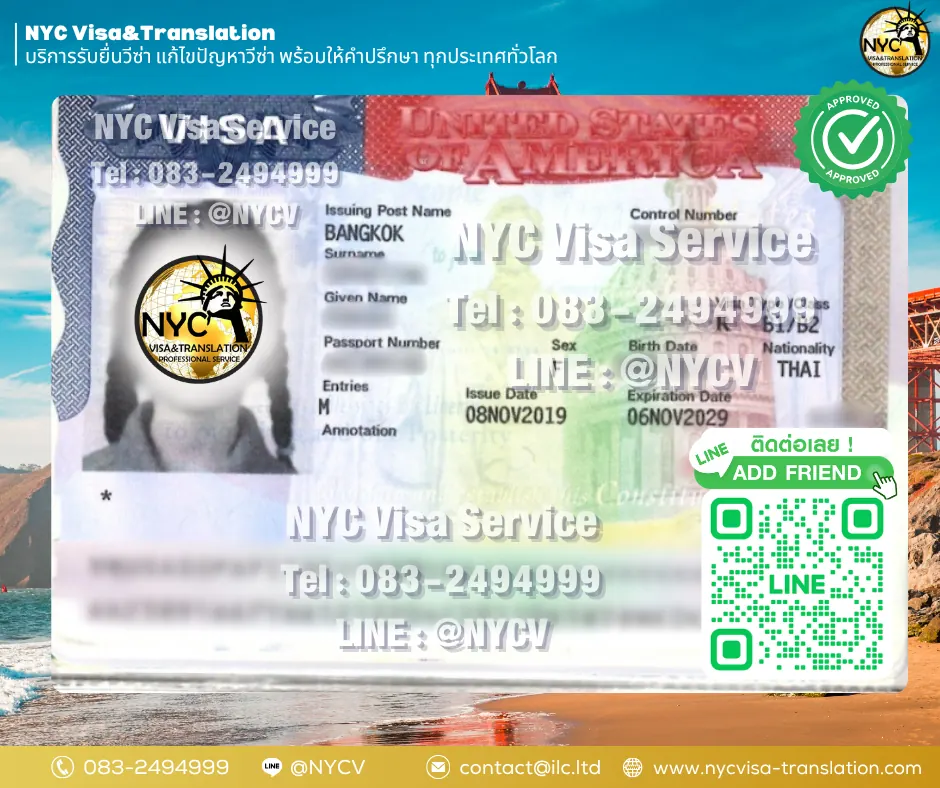
หน้าหนังสือเดินทางที่ติดวีซ่าสหรัฐอเมริกา
Thai Citizenship for American (USA) nationals · 🇹🇭 Citizenship · General Naturalisation

American (USA) 🇺🇸 × Citizenship · General Naturalisation 🇹🇭

American (USA) 🇺🇸 × Citizenship · General Naturalisation 🇹🇭 — Nationality Act B.E. 2508 (1965) §10. Fees THB 5,000 → THB 10,000. Processing 36–60 months. NYC Visa handles everything from Embassy of the United States, Bangkok (Wireless Rd) to Department of Provincial Administration (DOPA), Ministry of Interior.

ข้อมูลสำคัญ · Entity Panel
Reviewing authority (Thailand)
Department of Provincial Administration (DOPA), Ministry of Interior
Statutory basis
Nationality Act B.E. 2508 §10
Embassy & document issuance
Embassy of the United States, Bangkok (Wireless Rd)
Apostille / Legalisation
Apostille (Hague)
Thai language & anthem assessment
Required (live)
Processing
36–60 months
Fees
THB 5,000 → THB 10,000

Reduces US tax filing complexity (PR has no green-card test bearing); de-risks Non-B suspension on job change — Thai citizenship under Nationality Act B.E. 2508 (1965) §10 grants voting rights, freehold land ownership, citizenship transmission to children, and a Thai passport with visa-free access to 82 countries. Approved by Department of Provincial Administration (DOPA), Ministry of Interior and published in the Royal Thai Government Gazette.

Document pipeline for American (USA): Apostille at issuing US State + US Department of State → certified Thai translation → Thai MFA — no Bangkok Embassy step (US is Hague party). NYC Visa collects from FBI Identity History Summary (Channeler/eDeparture) + state-level criminal background check + US Secretary of State (federal) + state-level Secretary of State for state-issued docs, ships to Bangkok and authenticates end-to-end before filing Kor.1/Kor.5.

American (USA)-specific pitfall: Immigration Bureau requires FBI report ≤6 months old + Thai PND.91 TIN must reconcile with US ITIN/SSN reported in FATCA — NYC Visa reconciles both numbers. — we pre-validate every dossier against DOPA's published checklist.

Our 8-stage workflow (36–60 months): Eligibility Audit (§10) → Embassy/MFA chain → Tabian Baan + PR cross-verify → Ties-to-Thailand dossier (60–100 pages) → 8-session anthem & Thai coaching → file Kor.1/Kor.5 at Department of Provincial Administration (DOPA), Ministry of Interior → Naturalisation Committee Q&A → Royal Gazette publication + Thai National ID.
Document authentication chain

Apostille at issuing US State + US Department of State → certified Thai translation → Thai MFA — no Bangkok Embassy step (US is Hague party)

FBI Identity History Summary (Channeler/eDeparture) + state-level criminal background check

Common pitfalls & how we fix them

Immigration Bureau requires FBI report ≤6 months old + Thai PND.91 TIN must reconcile with US ITIN/SSN reported in FATCA — NYC Visa reconciles both numbers.

Why this track stands out

General track requires 50/100 examination score from the DOPA Committee plus live singing of both anthems — NYC Visa coaches 8 sessions on anthem + interview and prepares a 60–100-page ‘Ties to Thailand’ dossier.

30–60d
Doc-prep turnaround
20+
Nationalities served
HowTo · ขั้นตอน

How a American (USA) files Citizenship · General Naturalisation

  1. 1

    Free §10 audit: PR 5 yrs + 3 yrs tax + income ≥THB 80,000/mo

  2. 2

    Obtain FBI Identity History Summary (Channeler/eDeparture) + state-level criminal background check

  3. 3

    Apostille via US Secretary of State (federal) + state-level Secretary of State for state-issued docs

  4. 4

    Sworn translator + MFA notarisation

  5. 5

    MFA Department of Consular Affairs (Chaeng Wattana)

  6. 6

    Tabian Baan + family + employment + community 60–100 pages

  7. 7

    8 sessions — sing both anthems live before the Committee

  8. 8

    Kor.1/Kor.5 at Department of Provincial Administration (DOPA), Ministry of Interior → Naturalisation Committee → Royal Gazette + Thai National ID

9 core documents
Thai Alien Registration Book (residence certificate)
PR Certificate (Tor.Mor.17) — 5+ years
Tabian Baan Tor.Ror.14 (house registration)
Tax filings PND.91 × 3 yrs + employer letter
Police clearance (Thai + origin)
Medical certificate (government hospital)
Thai language assessment record
Anthem performance video (rehearsal)
Application form Kor.1 + Kor.2
FAQ

FAQ · American (USA) × Citizenship · General Naturalisation

What docs does a American (USA) need for Citizenship · General Naturalisation?

Apostille at issuing US State + US Department of State → certified Thai translation → Thai MFA — no Bangkok Embassy step (US is Hague party).

What pitfall does DOPA flag for American (USA)?

Immigration Bureau requires FBI report ≤6 months old + Thai PND.91 TIN must reconcile with US ITIN/SSN reported in FATCA — NYC Visa reconciles both numbers.

Do I need to sing the anthems?

Yes — Royal Anthem + National Anthem live before the Committee. NYC Visa coaches 8 sessions.

Processing time?

36–60 months — including Royal Gazette wait.

Government fees?

Filing THB 5,000 · approval THB 10,000.

Apostille or 4-tier legalisation?

Apostille — US Secretary of State (federal) + state-level Secretary of State for state-issued docs

Do I have to renounce my original nationality?

Depends on the origin country. Thailand permits dual citizenship, but several countries (China, Japan, Netherlands) compel renunciation. NYC Visa runs the analysis up front.

NYC Visa service fee?

available on request (standard) + available on request (document pipeline) + available on request (anthem/interview coaching). Free LINE consult.

How does a American (USA) naturalise as Thai (Citizenship · General Naturalisation)?

American (USA) 🇺🇸 × Citizenship · General Naturalisation 🇹🇭 — Nationality Act B.E. 2508 (1965) §10. Fees THB 5,000 → THB 10,000. Processing 36–60 months. NYC Visa handles everything from Embassy of the United States, Bangkok (Wireless Rd) to Department of Provincial Administration (DOPA), Ministry of Interior.

🇺🇸 American (USA) × 🇹🇭 Citizenship · General Naturalisation 36–60 mo
Service Knowledge Base

Thai citizenship & permanent residence (PR) — practical answers

First-party answers on Thai permanent residence under the Immigration Act B.E. 2522 (1979) and naturalisation under the Nationality Act B.E. 2508 (1965): who qualifies, the annual quota system, what happens after approval, and which supporting documents must be translated and legalised before filing. (13+ search topics covered)

Does holding a Thai spouse or a work permit guarantee approval?

No. Marriage to a Thai national and long-term employment are relevant qualifying facts, but each application is assessed against the statutory criteria, the quota and the discretion of the deciding authority. Anyone promising a guaranteed outcome is misrepresenting the process. A realistic strategy documents continuous lawful status, tax compliance and genuine ties, and accepts the official timetable.

Which documents most often need translation and legalisation in a PR or citizenship file?

Foreign birth, marriage and divorce records, police clearance from countries of previous residence, academic and professional certificates, and company documents supporting employment or investment. Each must follow the certification chain the receiving Thai authority accepts, and name spellings must match the passport and the Thai house registration entry exactly. Mismatched transliteration is one of the most common reasons a file is returned.

Who decides permanent residence and naturalisation in Thailand?

Permanent residence applications are processed by the Immigration Bureau under the Immigration Act and are subject to an annual quota by nationality, with the Minister of Interior giving final approval. Naturalisation is handled under the Nationality Act through the Department of Provincial Administration and the police, again ending in ministerial discretion. No service provider can influence these decisions; what can be controlled is the completeness and internal consistency of the file.

How does naturalisation differ from permanent residence?

Permanent residence grants indefinite stay while keeping your current nationality; naturalisation grants Thai nationality and adds requirements such as a qualifying period of residence, Thai language ability and case-by-case assessment by the responsible authorities.

What are the core conditions for Thai permanent residence?

Holding a non-immigrant visa with continuous extensions for the required number of years, income and tax evidence meeting the thresholds, qualifying under one of the categories, and filing during the annual window, subject to per-nationality quotas.

How long does the process take?

Both PR and naturalisation are multi-stage processes across several agencies with no guaranteed timeframe. Actual duration depends on the volume of applications in that round, document completeness, and the outcome of background checks. What you can control is submitting a complete, correctly formatted file on day one.

Can I keep my original nationality?

Thai law does not automatically require every naturalised person to renounce their previous nationality, but your country of origin may prohibit dual nationality on its side. Both legal systems must be checked together before you file.

How must foreign documents be translated and legalised?

Birth certificates, marriage certificates, police clearance certificates and academic records issued abroad must first be authenticated through the issuing country's channel (apostille or embassy attestation as applicable), then translated into Thai and legalised by the Department of Consular Affairs, Ministry of Foreign Affairs, before they are accepted by Immigration or the Department of Provincial Administration.
Topics covered
คำค้นหลัก: ขอถิ่นที่อยู่ถาวรในไทย · thailand permanent residence application · แปลงสัญชาติไทย ขั้นตอน · thai citizenship naturalization requirements · ใบสำคัญถิ่นที่อยู่ ตม. · residence certificate immigration thailand · ใบสำคัญประจำตัวคนต่างด้าว · หญิงต่างด้าวสมรสกับคนไทย ขอสัญชาติ
เอกสารที่ต้องแปล/รับรอง: แปลสูติบัตรรับรองกงสุล · แปลทะเบียนสมรสยื่น ตม. · ประวัติอาชญากรรมแปลรับรอง · แปลวุฒิการศึกษายื่นขอ PR · certified translation for thai PR application
Official references

Need your documents reviewed or your case assessed? Ask our team by phone, LINE, or email. We reply within two hours during business hours (Mon–Sat 9:00–18:00 ICT).

Passport page bearing a United States visa
Passport page bearing a United States visa — Service illustration; requirements depend on the document and receiving authority
Service Playbook

Permanent residence and Thai nationality — build the file early

Both PR and naturalisation are assessed on a continuous multi-year record. Systematic document keeping from year one is the deciding factor.

Documents to prepare

  • • All passports showing the continuous stay record
  • • Work permits and employment contracts for the required years
  • • Personal income tax filings for the required years
  • • Social security and payroll evidence
  • • Marriage and family records where filing under a family category
  • • Police clearance and any items listed in the current round's notice

Step-by-step process

  1. 1. Check eligibility and category — Confirm the years of continuous permits required and the best-fit category.
  2. 2. Assemble the historic record — Tax, social security and contracts for every required year.
  3. 3. Translate and legalise foreign records — Foreign documents need home-country certification and Thai translation.
  4. 4. File in an open round — Track the intake notice and prepare for interview or testing.

Pitfalls and rejection causes

  • • Gaps in the stay record directly affect eligibility.
  • • Intake rounds are limited and subject to per-nationality quotas.
  • • One missing year usually pushes the file to the next round.
  • • Employer changes need complete bridging documentation.

Tips from our team

  • • Scan and file every annual document from your first working year.
  • • Keep all expired passports.
  • • Prepare a full year ahead so you never miss an intake.

Prefer not to handle the queues yourself, or worried about a rejection? Send us photos of your documents for a free pre-check. We handle the full chain — obtaining certified copies, translation, certification and submission — and keep you updated at each step. Reach us on LINE, phone or email during business hours.

Route Comparison

Comparing Thai permanent residence and citizenship routes

These are separate processes with separate criteria and separate deciding authorities.

RouteWhen to useCertifying authorityApprox. durationRejection risk
Permanent residenceYou hold continuous qualifying visas with the required income and tax recordImmigration Bureau and the Immigration CommissionHighly variable — normally spans more than a yearApplications open in windows with per-nationality quotas; missing a window means waiting for the next
Naturalisation as a Thai nationalYou hold permanent residence and meet the statutory periodDepartment of Provincial Administration, Ministry of InteriorHighly variable — a long, multi-stage processGaps in historic records such as tax or household registration stall the file mid-way
Thai nationality through marriage or parentageA family connection recognised by the Nationality Act existsDepartment of Provincial Administration, Ministry of InteriorVariable by application typeForeign civil-status documents must clear every legalisation stage before they can be used

Timelines above are practical estimates from live casework and can change with each authority's policy; confirm with the receiving authority before booking travel. If you would rather not test routes by trial and error, our advisers can assess which route fits your case.

Advisory Service

We do not just process documents — we advise you through the whole case

Our team has worked on cross-border documents, certified translation and government liaison since 2015. Most rejections we see are not caused by missing paperwork but by choosing the wrong route on day one, so we always start with a case assessment.

Route assessment

We look at your destination, purpose and deadline, then tell you which certification route applies — and which steps you can skip.

Pre-submission review

Name spelling, consistency across documents, document age and translation format are checked before anything reaches a counter.

Timeline planning

We sequence the steps around your appointment or travel date and flag bottlenecks in advance.

Rejection recovery

We read the refusal reasons, identify the underlying cause, and plan a resubmission that answers what the authority asked for.

Rather not learn by trial and error? Send your case details and document photos for a review — reach us on LINE, phone or email during business hours.

Practical Q&A

Practical questions · Near me / DIY / Required documents

Is there a service point near me?

Our only office is at Ladprao 95, Wang Thonglang, Bangkok. Clients elsewhere can send scans through LINE @nycvisa for an initial scope review, then agree how to provide originals if required. Contact us before visiting or sending documents.

Can I handle this myself?

Many steps can be done personally under the relevant authority's rules. What usually costs time is the wrong sequence, a translation format that does not match the requirement, or a source document version the recipient will not accept. Check the destination checklist before starting and ask us if anything is unclear.

Which documents should I prepare?

Generally the original document from the competent authority, the owner's ID or passport, a translation in the format the destination requires, and a power of attorney if someone acts for you. Details vary by service type — ask our team for a case-specific checklist.
Practical advice & cautions

Visa and immigration matters: advice and cautions

Before you start
  • Read the official conditions first

    Visa conditions change. Check the deciding authority's latest announcement, then use our service to prepare documents and translations that match those conditions.

  • Order documents to the authority's checklist

    Assembling the bundle in the required order with an index speeds up assessment and reduces requests for more documents.

  • Make funds explainable

    Large deposits made shortly before filing attract questions. Support them with evidence of income and use statements bearing the bank's original seal.

  • Check passport validity and blank pages

    Many countries set a minimum remaining validity and number of blank pages. Verify before your appointment.

Common reasons documents get rejected
  • Refiling immediately without fixing the cause

    Analyse the refusal grounds and address them; resubmitting the same file usually produces the same result.

  • Translations the destination does not accept

    Accepted translator categories differ by country; confirm the required type before ordering.

  • Believing guaranteed-approval claims

    No provider can guarantee an outcome; only the immigration authority or embassy decides. Our role is to make the file accurate and complete so avoidable rejections are reduced.

  • Form data contradicting the attachments

    Dates, addresses or travel history that conflict with supporting documents are a frequent refusal ground and may be read as misrepresentation.

Requirements differ by authority and destination country and can change. Confirm current conditions with the receiving authority, or ask our team by phone, LINE or email.

What people search for

Frequently searched topics about visas and immigration

Refusal and reapplication
Read the stated reason first and address the actual cause rather than resubmitting the same file.
A visa is not a work authorisation
Holding a visa does not automatically grant work rights; a work permit is a separate matter.
Documents required for a visa application
Checklists are set by the embassy or receiving authority; always follow their current published notice.
Extensions and periodic reporting
Long-stay holders must report at the intervals set by the Immigration Bureau.

These topics reflect the rules and practice of the relevant authorities and can change. Confirm with the receiving authority, or ask our team by phone, LINE or email.

Related services

What clients usually handle next

One document set often moves through several stages — translation, notarial certification, legalization and finally a visa filing. The links below follow that real sequence.

External authority references

Authority requirements change. Verify with the receiving authority before filing, or ask our team by phone, LINE or email.

Choosing a document translation provider in Thailand

Pick a translation provider by the destination, not by turnaround alone. If the file goes to the Thai Department of Consular Affairs or an embassy, the translator must know the format that office accepts, not just the meaning. Verify three things: the certifier is named and identifiable, the destination accepts that certification format, and names, dates and document numbers match the passport character for character.

How to evaluate a provider

  • The certifier is named and identifiable — Consular offices and embassies check who certified the translation, not only the wording.
  • Knows the format the destination accepts — Each embassy differs: attached source copy, letterhead, or prior consular legalization.
  • Character-level verification — Mismatched name spelling and dates against the passport is the most common rejection cause.
  • Owns corrections after rejection — Submissions run on appointment dates; slow corrections cost the applicant the slot.
  • Documented custody of originals — Some civil registry documents are hard to reissue, so intake and return must be traceable.

Questions to ask before you commit

  1. Does my destination require consular or embassy legalization afterwards?
  2. How many working days does it actually take, counted from a complete file?
  3. If the receiving authority rejects or asks for changes, do you correct it, and under what terms?
  4. How can I track status, and who physically holds the original documents?
  5. Who will certify this translation, and will the certifier be named on the document?

Your options, and who each suits

OptionBest forWhat to know
Freelance translatorInformal use where no authority certification is requiredMany embassies will not accept an uncertified translation.
Translation agency with certificationVisa, study and civil registry filingsConfirm the agency also handles the legalization step if the destination requires it.
End-to-end provider (translate + legalize)Files with a fixed appointment deadlineAsk which steps are in-house and which are subcontracted.

FAQ on choosing a provider

Which translation service is recommended for embassy submissions?
Choose one that names the certifier on the translation, knows the exact format your embassy accepts, and verifies names and dates against the passport before certifying. Ask whether they also handle consular legalization so the file does not stall between two vendors.
Does a cheaper translation get rejected more often?
Rejection correlates with format and verification, not price. A translation is rejected when the certifier cannot be identified, the layout does not match the receiving office's requirement, or a name or date differs from the passport.

แหล่งอ้างอิงทางการ · Authoritative Sources

  1. Nationality Act B.E. 2508 (1965) §10 — Statutory basis for Thai naturalisation
  2. Royal Thai Government Gazette — annual naturalisation announcement — Approval published per American (USA) applicant
  3. Embassy of the United States, Bangkok (Wireless Rd) — Source for American (USA) documents
  4. US Secretary of State (federal) + state-level Secretary of State for state-issued docs — Hague Apostille authority
  5. Thai MFA Department of Consular Affairs — Final authentication step
  6. Department of Provincial Administration (DOPA), Ministry of Interior — Thai reviewing authority