Citizenship track not found.
Name Change & Document Alignment Knowledge Base
Common questions about changing your name and keeping every document in the chain consistent afterwards. (8+ search topics covered)
Are documents issued in my former name still usable?
What causes most rejections?
Which spelling governs when transliterating a Thai name?
How does taking a spouse's surname work after a foreign marriage?
Can your team manage the whole sequence?
Which documents must be updated after a name change?
Need your documents reviewed or your case assessed? Ask our team by phone, LINE, or email. We reply during business hours (Mon–Fri 9:00–18:00, Sat 9:00–15:00, ICT).
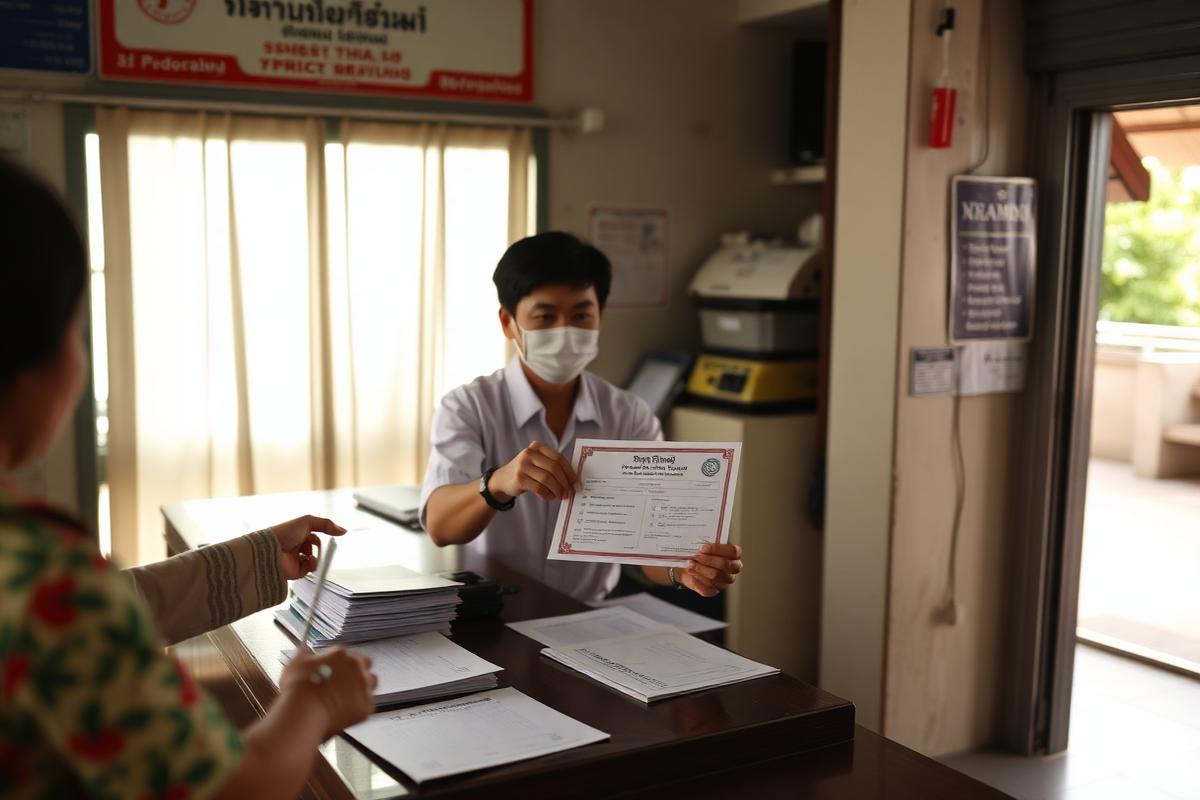
Legal name changes — making every document match
After a change of first name, surname or title, older documents still carry the previous name, and receiving authorities treat them as belonging to a different person. The fix is a complete chain of evidence: the change-of-name certificate, house registration, passport, and certified translations that state both the former and current name.
Documents to prepare
- • The change-of-name or change-of-surname certificate from the district registrar
- • A current house registration showing the new name
- • Current ID card and passport
- • Older documents still bearing the previous name (degree, marriage certificate, birth certificate)
- • Marriage or divorce registration if the surname change follows a change of marital status
Step-by-step process
- 1. Map the documents — List which documents carry the old name and which the receiving authority requires.
- 2. Obtain a fresh certificate — A newly issued certified copy from the registrar is verifiable.
- 3. Translate showing both names — The translation must connect former and current names within the same document.
- 4. Certify along the destination route — Consular legalisation and embassy attestation, or the format the destination specifies.
- 5. Update downstream records — Passport, driving licence, bank and academic records should end up consistent.
Pitfalls and rejection causes
- • Submitting new-name documents without the change-of-name certificate is the most common rejection cause.
- • Romanisation must match the passport exactly, not a preferred spelling.
- • Degrees and transcripts are rarely reissued; the translation must bridge the names instead.
- • Some countries require every historical change, not only the latest one.
Tips from our team
- • A one-page index showing former name to current name speeds up counter checks.
- • Request the house registration and certificate in one visit.
- • Prepare all certificates upfront if the name changed more than once.
Prefer not to handle the queues yourself, or worried about a rejection? Send us photos of your documents for a free pre-check. We handle the full chain — obtaining certified copies, translation, certification and submission — and keep you updated at each step. Reach us on LINE, phone or email during business hours.
Name change: reissue Thai records or prove same-person
When old records and your passport disagree, two routes are commonly accepted; they differ in time and cost.
| Route | When to use | Certifying authority | Approx. duration | Rejection risk |
|---|---|---|---|---|
| Reissue the full document set under the current name | A strict receiver wants every document to match | The issuing district registrar and the Department of Consular Affairs | Variable by registrar and volume | Some records (e.g. birth certificates) always reissue under the original name |
| Change-of-name / same-person certificate + certified translation | Old documents cannot be reissued, or there are many of them | District registrar, Consular Affairs, destination embassy where required | Variable — days to weeks | Transliteration that differs from the passport breaks the identity chain |
| Notify the destination institutions directly | You already hold records abroad — residency file, bank, social insurance | Each destination institution | Variable per institution | Updating only some institutions creates conflicts at visa renewal |
Timelines above are practical estimates from live casework and can change with each authority's policy; confirm with the receiving authority before you plan. If you would rather not test routes by trial and error, our advisers (15+ years of casework) can assess your case and handle the whole chain for you.
We do not just process documents — we advise you through the whole case
Our team has worked on cross-border documents, certified translation and government liaison for over 15 years. Most rejections we see are not caused by missing paperwork but by choosing the wrong route on day one, so we always start with a case assessment.
Route assessment
We look at your destination, purpose and deadline, then tell you which certification route applies — and which steps you can skip.
Pre-submission review
Name spelling, consistency across documents, document age and translation format are checked before anything reaches a counter.
Timeline planning
We sequence the steps around your appointment or travel date and flag bottlenecks in advance.
Rejection recovery
We read the refusal reasons, identify the underlying cause, and plan a resubmission that answers what the authority asked for.
Rather not learn by trial and error? Send your case details and document photos for a review — reach us on LINE, phone or email during business hours.
Practical questions · Near me / DIY / Required documents
Is there a service point near me?
Can I handle this myself?
Which documents should I prepare?
Visa and immigration matters: advice and cautions
Read the official conditions first
Visa conditions change. Check the deciding authority's latest announcement, then use our service to prepare documents and translations that match those conditions.
Order documents to the authority's checklist
Assembling the bundle in the required order with an index speeds up assessment and reduces requests for more documents.
Make funds explainable
Large deposits made shortly before filing attract questions. Support them with evidence of income and use statements bearing the bank's original seal.
Check passport validity and blank pages
Many countries set a minimum remaining validity and number of blank pages. Verify before your appointment.
Refiling immediately without fixing the cause
Analyse the refusal grounds and address them; resubmitting the same file usually produces the same result.
Form data contradicting the attachments
Dates, addresses or travel history that conflict with supporting documents are a frequent refusal ground and may be read as misrepresentation.
Expired supporting documents
Civil registry extracts, medical certificates and police clearances have limited validity; old copies make the bundle incomplete.
Believing guaranteed-approval claims
No provider can guarantee an outcome; only the immigration authority or embassy decides. Our role is to make the file accurate and complete so avoidable rejections are reduced.
Requirements differ by authority and destination country and can change. Confirm current conditions with the receiving authority, or ask our team by phone, LINE or email.
Frequently searched topics about visas and immigration
- A visa is not a work authorisation
- Holding a visa does not automatically grant work rights; a work permit is a separate matter.
- Notification of residence for foreign nationals
- House owners or occupiers must notify the stay of foreign nationals under Thai immigration law.
- Documents required for a visa application
- Checklists are set by the embassy or receiving authority; always follow their current published notice.
- Refusal and reapplication
- Read the stated reason first and address the actual cause rather than resubmitting the same file.
These topics reflect the rules and practice of the relevant authorities and can change. Confirm with the receiving authority, or ask our team by phone, LINE or email.
What clients usually handle next
One document set often moves through several stages — translation, notarial certification, legalization and finally a visa filing. The links below follow that real sequence.
- Thailand visas for foreign nationalsNew applications, extensions, status changes and 90-day reporting
- Thai work permitsNew applications, renewals and amendments under Department of Employment rules
- BOI, LTR and SMART VisaInvestment promotion privileges and long-term visas for specialists
- Thai–foreign marriage registrationAffirmation of freedom to marry, embassy certification and district office registration
- Thai citizenship & permanent residenceEligibility tracks, supporting documents and interview preparation
- MFA legalization at the Department of Consular AffairsThe step after translation for documents used abroad or filed with an embassy
- Thai e-Visa Official Portal (กระทรวงการต่างประเทศ) — ช่องทางยื่นวีซ่าเข้าประเทศไทยอย่างเป็นทางการ
- สำนักงานตรวจคนเข้าเมือง (Thai Immigration Bureau) — ระเบียบการต่อวีซ่า รายงานตัว 90 วัน และ re-entry permit
- สำนักงานคณะกรรมการส่งเสริมการลงทุน (BOI) — LTR Visa และ SMART Visa
- LTR Visa – Thailand Board of Investment
Authority requirements change. Verify with the receiving authority before filing, or ask our team by phone, LINE or email.