Driving licence nationality not found.
Driving Licence Conversion & IDP Knowledge Base
Common questions about using a foreign licence in Thailand, converting to a Thai licence, and certified translation of licences for overseas use. (8+ search topics covered)
How do I use a Thai licence abroad?
What causes most rejections in licence matters?
Can your team handle the whole process?
Can a foreigner drive in Thailand on a home-country licence?
What documents are needed to convert to a Thai licence?
Will I have to retake the driving test?
Need your documents reviewed or your case assessed? Ask our team by phone, LINE, or email. We reply during business hours (Mon–Fri 9:00–18:00, Sat 9:00–15:00, ICT).
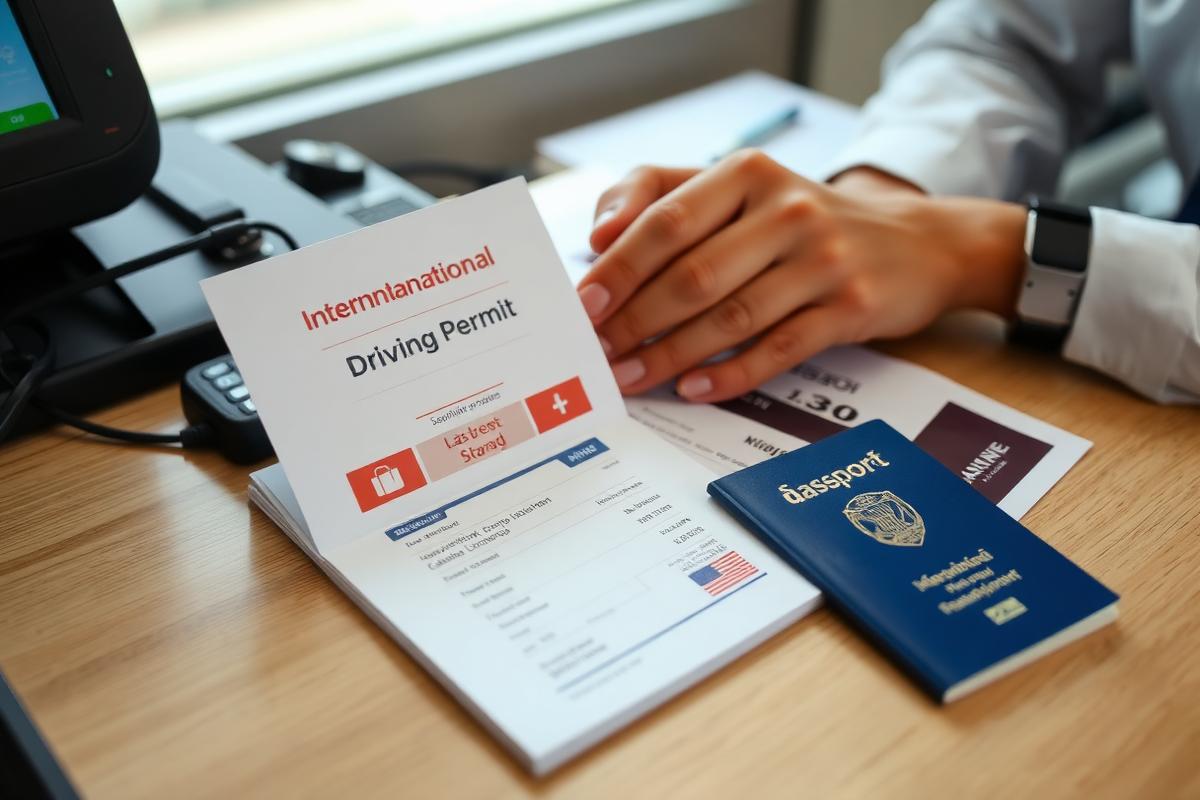
Driving licences across borders — translation, certification and conversion
Three distinct routes exist: using a Thai licence abroad (an International Driving Permit from the Department of Land Transport), driving in Thailand on a foreign licence, and converting a foreign licence into a Thai one, which requires a certified translation and proof of residence.
Documents to prepare
- • The valid original licence plus copies of both sides
- • Passport with visa page and the latest entry stamp
- • A residence certificate from Immigration or your embassy
- • A recent medical certificate within the period the Department of Land Transport accepts
- • A certified translation of the licence into Thai or English
- • Photographs in the required format
Step-by-step process
- 1. Identify the route — Driving abroad, driving in Thailand temporarily, or converting to a Thai licence — each uses a different document set.
- 2. Prepare the certified translation — Vehicle categories must be translated exactly as printed on the original.
- 3. Obtain a residence certificate — Issued by Immigration or your embassy; it has a short validity.
- 4. Medical check and appointment — The medical certificate must be recent; book the transport office slot in advance.
- 5. Attend the test and collect the licence — A physical aptitude test is standard; some cases also require a short course.
Pitfalls and rejection causes
- • An International Driving Permit never replaces the original licence — carry both.
- • Residence certificates expire quickly; requesting one too early wastes the document.
- • A translation that omits vehicle categories leads to the wrong licence class.
- • Expired licences are generally not accepted for conversion.
Tips from our team
- • Send photos of both sides of the licence for a pre-check.
- • Confirm accepted paperwork with your car rental company before travelling.
- • Combine the residence certificate with a visa extension visit to save a trip.
Prefer not to handle the queues yourself, or worried about a rejection? Send us photos of your documents for a free pre-check. We handle the full chain — obtaining certified copies, translation, certification and submission — and keep you updated at each step. Reach us on LINE, phone or email during business hours.
IDP vs certified translation vs local licence
Choose the wrong document and you may be uninsured or unable to drive legally abroad.
| Route | When to use | Certifying authority | Approx. duration | Rejection risk |
|---|---|---|---|---|
| International Driving Permit (IDP) | The destination recognises IDPs under a convention Thailand is party to, short stays | Department of Land Transport | Usually same-day once documents are complete | An IDP is only valid alongside the Thai licence and has a limited validity |
| Certified translation + legalisation | The destination does not accept IDPs but accepts a certified translation | Translator, Department of Consular Affairs and/or the destination embassy | Variable — days to weeks | Mistranslated vehicle classes or restrictions change how your entitlement is read |
| Convert to or sit for a local licence | Long stays, employment, or permanent relocation | The destination's transport authority | Highly variable — some jurisdictions exchange, others require testing | Letting the Thai licence expire abroad usually removes the exchange option |
Timelines above are practical estimates from live casework and can change with each authority's policy; confirm with the receiving authority before you plan. If you would rather not test routes by trial and error, our advisers (15+ years of casework) can assess your case and handle the whole chain for you.
We do not just process documents — we advise you through the whole case
Our team has worked on cross-border documents, certified translation and government liaison for over 15 years. Most rejections we see are not caused by missing paperwork but by choosing the wrong route on day one, so we always start with a case assessment.
Route assessment
We look at your destination, purpose and deadline, then tell you which certification route applies — and which steps you can skip.
Pre-submission review
Name spelling, consistency across documents, document age and translation format are checked before anything reaches a counter.
Timeline planning
We sequence the steps around your appointment or travel date and flag bottlenecks in advance.
Rejection recovery
We read the refusal reasons, identify the underlying cause, and plan a resubmission that answers what the authority asked for.
Rather not learn by trial and error? Send your case details and document photos for a review — reach us on LINE, phone or email during business hours.
Practical questions · Near me / DIY / Required documents
Where do I lodge a visa application — must I go to the embassy?
Can I apply myself, or do I need an agency?
What are the baseline documents?
Expat, relocation and education: advice and cautions
Prepare dependants' documents in the same batch
Marriage and birth certificates for dependants usually need the same translation and certification as the principal's file.
Match health insurance to the visa conditions
Some visa categories set minimum coverage conditions. Verify the policy against the published requirement rather than informal advice.
Sequence documents before booking flights or signing a lease
Visas, work permits, housing and school places are interdependent. Start with the longest-lead document to avoid schedule clashes.
Request English-language academic records from the institution
Transcripts issued in English by the awarding institution often reduce translation steps, though legalisation may still be required abroad.
Missing reporting or accommodation-notification deadlines
Missed reports can carry legal consequences and affect the next extension even when other documents are complete.
Submitting plain copies instead of institution-issued records
Many assessment bodies accept only documents issued or sent directly by the institution; ordinary photocopies are commonly rejected.
Insurance cover ending before the permitted stay
A policy expiring before the end of the requested period typically triggers additional requests or delays the decision.
Starting legalisation too close to the deadline
Multi-agency, cross-border certification has variable timelines. Late starts are a common cause of missed intakes.
Requirements differ by authority and destination country and can change. Confirm current conditions with the receiving authority, or ask our team by phone, LINE or email.
What clients usually handle next
One document set often moves through several stages — translation, notarial certification, legalization and finally a visa filing. The links below follow that real sequence.
- Notarial services by a licensed Thai attorneySignature witnessing, certified true copies, affidavits and powers of attorney for overseas use
- Certified document translation, all languagesTranslations for Thai and overseas authorities with a certification statement
- NAATI-certified translation for Australia & New ZealandTranslations accepted by Australian government agencies, with certifier stamp
- Thai–foreign marriage registrationAffirmation of freedom to marry, embassy certification and district office registration
- Police clearance certificateFiled with the Royal Thai Police Special Branch, with translation and legalization
- Outbound visas for Thai nationalsDocument preparation, embassy appointments and pre-submission file review
- กองสัญชาติและนิติกรณ์ กรมการกงสุล กระทรวงการต่างประเทศ — หน่วยงานรับรองนิติกรณ์เอกสาร (legalization) ของประเทศไทย
- กระทรวงการต่างประเทศ (MFA Thailand)
- HCCH – Apostille Section (อนุสัญญากรุงเฮก 1961) — รายชื่อรัฐภาคีและสถานะการใช้ Apostille
- กรมการปกครอง (DOPA) — ทะเบียนราษฎร ทะเบียนสมรส/หย่า และหนังสือรับรองสถานภาพ
Authority requirements change. Verify with the receiving authority before filing, or ask our team by phone, LINE or email.