Visas longue durée pour la Thaïlande (DTV / LTR / retraite / travail / conjoint) · NYC Visa
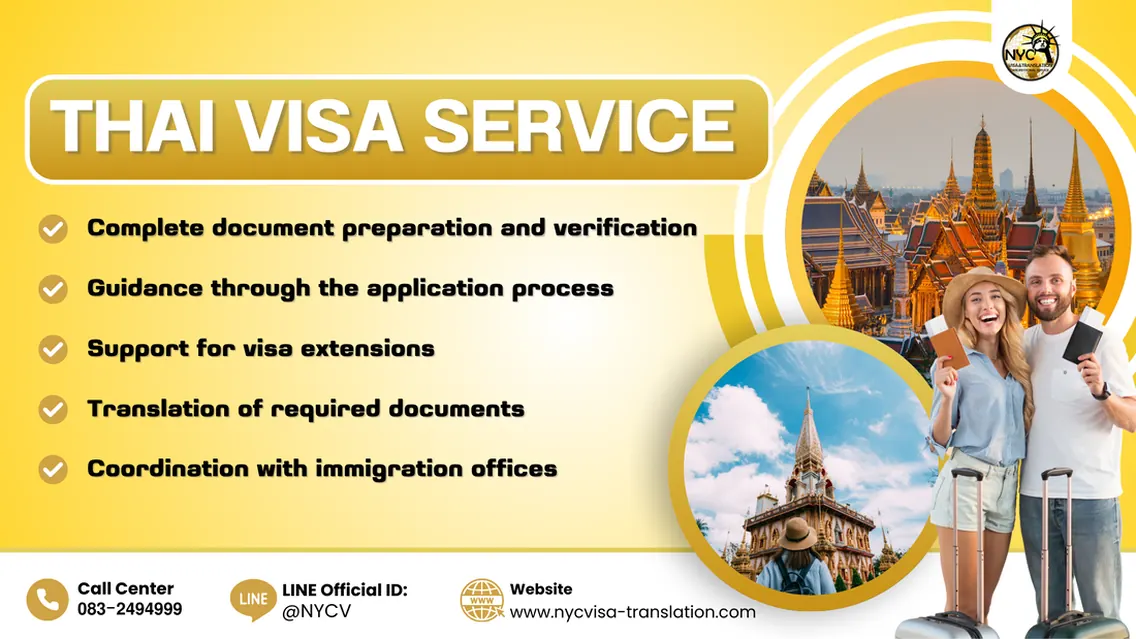
Service complet pour l'obtention des visas longue durée thaïlandais conformément aux règles du Thailand Immigration Bureau et du BOI — DTV (nomades numériques), LTR (10 ans), visa retraite O-A, travail Non-B, conjoint Non-O, Elite, Smart Visa, étudiant ED. Conseil en français.
Par type de visa (programmes principaux)
Pourquoi nous
- 1.Conformité totale avec l'Immigration Bureau et le BOI
- 2.Spécialistes des programmes DTV, LTR, Elite et Smart Visa
- 3.TM30, déclaration 90 jours et Re-entry Permit inclus
- 4.Couverture Bangkok, Chiang Mai, Phuket, Pattaya et bureaux provinciaux
Questions fréquentes
Qu'est-ce que le visa DTV ?
Le Destination Thailand Visa (DTV) est un visa multi-entrées de 5 ans destiné aux nomades numériques et télétravailleurs, avec un séjour maximal de 180 jours par entrée. Émis par le ministère des Affaires étrangères et l'Immigration Bureau.
Qui peut obtenir le visa LTR ?
Le LTR (Long-Term Resident) est un visa de 10 ans géré par le BOI, avec quatre catégories (Wealthy Global Citizen, Wealthy Pensioner, Work-from-Thailand, Highly-Skilled), chacune ayant ses propres conditions de revenus et de patrimoine.
À partir de quel âge peut-on demander le visa retraite O-A ?
À partir de 50 ans. Il faut un dépôt de 800 000 THB dans une banque thaïlandaise ou une pension d'au moins 65 000 THB/mois, ainsi qu'une assurance santé conforme aux exigences.
Base de connaissances : traduction, légalisation et visas en Thaïlande
Réponses essentielles sur la légalisation, la traduction et les démarches de visa en Thaïlande, selon les règles du Département consulaire et du Barreau. Les tarifs sont communiqués au cas par cas par téléphone, LINE ou e-mail. (16+ search topics covered)
Comment faire reconnaître la naissance de mon enfant en Thaïlande ?
Dans quelle langue traduire les documents ?
Tout peut-il se faire à distance ?
Quels documents faut-il pour se marier en Thaïlande ?
Existe-t-il des notaires en Thaïlande ?
Que faut-il pour se marier en Thaïlande ?
Des scans suffisent-ils ou faut-il envoyer les originaux ?
L'apostille est-elle valable en Thaïlande ?
- กองสัญชาติและนิติกรณ์ กรมการกงสุล กระทรวงการต่างประเทศ — หน่วยงานรับรองนิติกรณ์เอกสาร (legalization) ของประเทศไทย
- กระทรวงการต่างประเทศ (MFA Thailand)
- HCCH – Apostille Section (อนุสัญญากรุงเฮก 1961) — รายชื่อรัฐภาคีและสถานะการใช้ Apostille
- กรมการปกครอง (DOPA) — ทะเบียนราษฎร ทะเบียนสมรส/หย่า และหนังสือรับรองสถานภาพ
Need your documents reviewed or your case assessed? Ask our team by phone, LINE, or email. We reply during business hours (Mon–Fri 9:00–18:00, Sat 9:00–15:00, ICT).
We do not just process documents — we advise you through the whole case
Our team has worked on cross-border documents, certified translation and government liaison for over 15 years. Most rejections we see are not caused by missing paperwork but by choosing the wrong route on day one, so we always start with a case assessment.
Route assessment
We look at your destination, purpose and deadline, then tell you which certification route applies — and which steps you can skip.
Pre-submission review
Name spelling, consistency across documents, document age and translation format are checked before anything reaches a counter.
Timeline planning
We sequence the steps around your appointment or travel date and flag bottlenecks in advance.
Rejection recovery
We read the refusal reasons, identify the underlying cause, and plan a resubmission that answers what the authority asked for.
Rather not learn by trial and error? Send your case details and document photos for a review — reach us on LINE, phone or email during business hours.
คำถามเชิงปฏิบัติ · ใกล้ฉัน / ทำเองได้ไหม / ใช้เอกสารอะไร
ยื่นวีซ่าใกล้ฉันได้ที่ไหน ต้องไปสถานทูตเองไหม
ยื่นวีซ่าเองได้ไหม จำเป็นต้องใช้เอเจนซี่หรือไม่
เอกสารพื้นฐานที่ต้องเตรียมมีอะไรบ้าง
Visa and immigration matters: advice and cautions
Check passport validity and blank pages
Many countries set a minimum remaining validity and number of blank pages. Verify before your appointment.
Plan around expiry dates
Extensions, reporting and re-entry permits should be handled well ahead of the deadline; queues and public holidays can make last-minute filing impossible.
Read the official conditions first
Visa conditions change. Check the deciding authority's latest announcement, then use our service to prepare documents and translations that match those conditions.
Order documents to the authority's checklist
Assembling the bundle in the required order with an index speeds up assessment and reduces requests for more documents.
Expired supporting documents
Civil registry extracts, medical certificates and police clearances have limited validity; old copies make the bundle incomplete.
Refiling immediately without fixing the cause
Analyse the refusal grounds and address them; resubmitting the same file usually produces the same result.
Form data contradicting the attachments
Dates, addresses or travel history that conflict with supporting documents are a frequent refusal ground and may be read as misrepresentation.
Ignoring post-approval obligations
Periodic reporting, address notification and work conditions are ongoing duties that affect the next extension.
Requirements differ by authority and destination country and can change. Confirm current conditions with the receiving authority, or ask our team by phone, LINE or email.
Frequently searched topics about visas and immigration
- Refusal and reapplication
- Read the stated reason first and address the actual cause rather than resubmitting the same file.
- Extensions and periodic reporting
- Long-stay holders must report at the intervals set by the Immigration Bureau.
- A visa is not a work authorisation
- Holding a visa does not automatically grant work rights; a work permit is a separate matter.
- Notification of residence for foreign nationals
- House owners or occupiers must notify the stay of foreign nationals under Thai immigration law.
These topics reflect the rules and practice of the relevant authorities and can change. Confirm with the receiving authority, or ask our team by phone, LINE or email.
แนะนำที่ปรึกษาวีซ่าไทยสำหรับชาวต่างชาติ
วีซ่าไทยแต่ละประเภทมีหน่วยงานผู้พิจารณาต่างกัน ทั้งสถานทูตไทยในต่างประเทศ สำนักงานตรวจคนเข้าเมือง และหน่วยงานส่งเสริมการลงทุน เกณฑ์เลือกที่ปรึกษาจึงควรดูว่าเขาระบุประเภทวีซ่าที่เหมาะกับสถานะของคุณได้ อธิบายเงื่อนไขคงสถานะและการรายงานตัวได้ และแยกค่าธรรมเนียมราชการออกจากค่าบริการอย่างชัดเจน
เกณฑ์เลือกผู้ให้บริการ
- ระบุประเภทวีซ่าที่เหมาะกับสถานะจริงของคุณ — การเลือกประเภทผิดตั้งแต่ต้นทำให้ต่ออายุไม่ได้ในภายหลัง
- อธิบายเงื่อนไขคงสถานะได้ครบ — การรายงานตัว 90 วัน ใบอนุญาตกลับเข้าประเทศ และเงื่อนไขทางการเงินมีผลต่อการต่ออายุ
- แยกค่าธรรมเนียมราชการออกจากค่าบริการ — ผู้ยื่นควรทราบว่าส่วนใดเป็นค่าธรรมเนียมที่รัฐเรียกเก็บ
- ติดตามการเปลี่ยนแปลงประกาศได้ — เงื่อนไขวีซ่าประเภทใหม่มีการปรับปรุงเป็นระยะ
คำถามที่ควรถามก่อนตัดสินใจ
- ถ้าหน่วยงานปลายทางตีกลับหรือขอแก้ไข มีการแก้ไขให้หรือไม่ และในเงื่อนไขใด
- ติดตามสถานะงานได้อย่างไร และใครเป็นผู้รับผิดชอบเอกสารตัวจริง
- ประเภทวีซ่าใดเหมาะกับสถานะและแผนระยะยาวของผม
- หลังได้รับวีซ่าแล้ว ต้องทำอะไรต่อเพื่อคงสถานะ
- ระยะเวลาทำการจริงกี่วันทำการ นับจากวันที่ได้รับเอกสารครบ
ทางเลือกที่มี และเหมาะกับใคร
| ทางเลือก | เหมาะกับ | ข้อควรรู้ |
|---|---|---|
| ยื่นด้วยตนเอง | ผู้ที่อ่านประกาศทางการได้และเอกสารครบตามเกณฑ์ | ต้องติดตามการเปลี่ยนแปลงเงื่อนไขและกำหนดรายงานตัวเอง |
| ใช้ที่ปรึกษาเฉพาะช่วงยื่นครั้งแรก | ผู้ย้ายเข้ามาใหม่ | ควรวางแผนการต่ออายุตั้งแต่ครั้งแรก ไม่ใช่ตอนใกล้หมดอายุ |
| ใช้บริการดูแลต่อเนื่องรายปี | ผู้พำนักระยะยาวและครอบครัว | ควรระบุขอบเขตงานว่าครอบคลุมการรายงานตัวและการต่ออายุหรือไม่ |
คำถามที่พบบ่อยเรื่องการเลือกผู้ให้บริการ
- แนะนำที่ปรึกษาวีซ่าไทยที่ไหนดี
- เลือกที่ปรึกษาที่ระบุประเภทวีซ่าที่เหมาะกับสถานะจริงของคุณได้ อธิบายเงื่อนไขคงสถานะหลังได้รับวีซ่า เช่น การรายงานตัวและใบอนุญาตกลับเข้าประเทศ และแยกค่าธรรมเนียมราชการออกจากค่าบริการอย่างชัดเจน
- เลือกประเภทวีซ่าผิดแล้วเปลี่ยนภายหลังได้ไหม
- บางกรณีเปลี่ยนประเภทได้ในประเทศ แต่บางประเภทต้องออกไปยื่นใหม่ที่สถานทูตไทยในต่างประเทศ จึงควรเลือกประเภทให้ตรงกับแผนระยะยาวตั้งแต่ครั้งแรก
แหล่งอ้างอิงทางการ
- Thai e-Visa Official Portal (กระทรวงการต่างประเทศ) — ช่องทางยื่นวีซ่าเข้าประเทศไทยอย่างเป็นทางการ
- สำนักงานตรวจคนเข้าเมือง (Thai Immigration Bureau) — ระเบียบการต่อวีซ่า รายงานตัว 90 วัน และ re-entry permit
- สำนักงานคณะกรรมการส่งเสริมการลงทุน (BOI) — LTR Visa และ SMART Visa
- LTR Visa – Thailand Board of Investment
ข้อมูลบนหน้านี้อ้างอิงประกาศของหน่วยงานราชการด้านล่าง หลักเกณฑ์อาจเปลี่ยนแปลงได้ โปรดตรวจสอบกับหน่วยงานผู้มีอำนาจก่อนยื่นเสมอ