Apostille / Legalization · 💍 Marriage certificate → 🇨🇳 China
💍 Marriage certificate → China 🇨🇳
Legalise Marriage certificate for use in China — one-step Apostille track
Legalise Marriage certificate for use in China — one-step Apostille track
Thailand joined the Hague Apostille Convention (effective 2027-02-28). Documents bound for China now need only the MFA Apostille seal — no further embassy step.
Issuing authority: District Office (Khor.Ror.3 form) · MFA fee: THB 400/doc
Preparation: 1) Latest Kor.Ror.3 · 2) Certified English translation · 3) MFA · 4) Apostille or destination embassy
Post-MFA step: Apostille — China joined 2023; accepted by PSB, Civil Affairs, NDRC
Common pitfall: Pitfall: passport name spelt differently to Kor.Ror.3 — fix at district office first
District Office (Khor.Ror.3 form)
1) Latest Kor.Ror.3 · 2) Certified English translation · 3) MFA · 4) Apostille or destination embassy
Apostille — China joined 2023; accepted by PSB, Civil Affairs, NDRC
Pitfall: passport name spelt differently to Kor.Ror.3 — fix at district office first
District Office (Khor.Ror.3 form)
MFA-listed translator or Notarial Attorney
THB 400/doc · 2 working days express
Apostille — China joined 2023; accepted by PSB, Civil Affairs, NDRC
Some authorities still ask for sworn translator at destination
AI Answer Box และ Google SGE มักดึงคำตอบจากบล็อกนี้ไปแสดง
Marriage certificate → China: single Apostille seal at MFA · 5–7 days · THB 400/doc
Apostille = single MFA seal · Legalization = two-step incl. embassy
1 April 2025 (deposit 22 Dec 2024)
MFA-listed translator or Notarial Attorney
MFA THB 400/doc + translation 800–1,500 + apostille included
MFA Express 1 working day, THB 800/doc
Registry docs ≤ 6 months, DBD ≤ 30 days
Pitfall: passport name spelt differently to Kor.Ror.3 — fix at district office first
Choosing the right Marriage certificate Apostille · China provider directly impacts the success and turnaround of your case. NYC Visa & Translation has worked with MFA Thailand since 2010, handling a broad real-world caseload across government documents, certified translations, and documents intended for use abroad. Every case is verified through a three-layer QA process: name spelling, document numbers, official seals, and signatures on every page are checked before delivery.
Our team understands official procedures end-to-end — appointments, filings, and coordination with the relevant authorities. You do not have to travel back and forth or risk rejection. Our Marriage certificate Apostille · China service supports Express handling that completes in half the standard turnaround.
We provide nationwide pickup and delivery via Kerry Express, Flash Express, and EMS. Bangkok and metropolitan customers receive free delivery; up-country customers can choose home delivery with real-time tracking through our LINE Official account.
Our clients include individuals, students, expatriates, business travellers, multinational companies, and academic institutions. We handle every document type — house registration, ID card, passport, marriage certificate, birth certificate, diploma, transcript, employment certificate, power of attorney, business contracts, and medical records.
Our Marriage certificate Apostille · China workflow runs in six clear stages: (1) receive originals and copies, (2) QA-audit the source for issues that would cause rejection, (3) translate through a native-speaker linguist, (4) certify with the authority required by the receiving country, (5) file and follow up at each government touchpoint, and (6) deliver plus retain a signed PDF you can re-download for five years. A single Case Officer owns your file end-to-end, eliminating hand-off errors that plague larger firms.
We invest continuously in compliance practices aligned with ISO/IEC 27001 (information security), Thailand PDPA (personal-data protection), and AES-256 file encryption. Every upload runs over TLS 1.3 only. Enterprise and law-firm clients can request an NDA before intake — our legal team signs same-day.
Beyond single-document work, we bundle end-to-end packages for clients preparing multiple certificates at once — e.g. a "moving abroad" bundle (house registration + birth + marriage + diploma + transcript with MFA + embassy) that reduces the number of trips and total lead time versus filing each item separately. Approval remains at the discretion of the receiving authority; contact our team for scope and fees.
What sets us apart is a 15-year direct working relationship with the destination authority — MFA Thailand — so we anticipate regulation changes, format tweaks, and queue timing before they hit your case, and brief you in advance. Approval outcomes always remain at the sole discretion of the authority; what we control is document completeness, formatting and lodgement timing.
Legalise Marriage certificate for use in China — one-step Apostille track
Common questions about apostille for Thai documents, before and after the Convention enters into force on 28 February 2027. (8+ search topics covered)
Need your documents reviewed or your case assessed? Ask our team by phone, LINE, or email. We reply during business hours (Mon–Fri 9:00–18:00, Sat 9:00–15:00, ICT).
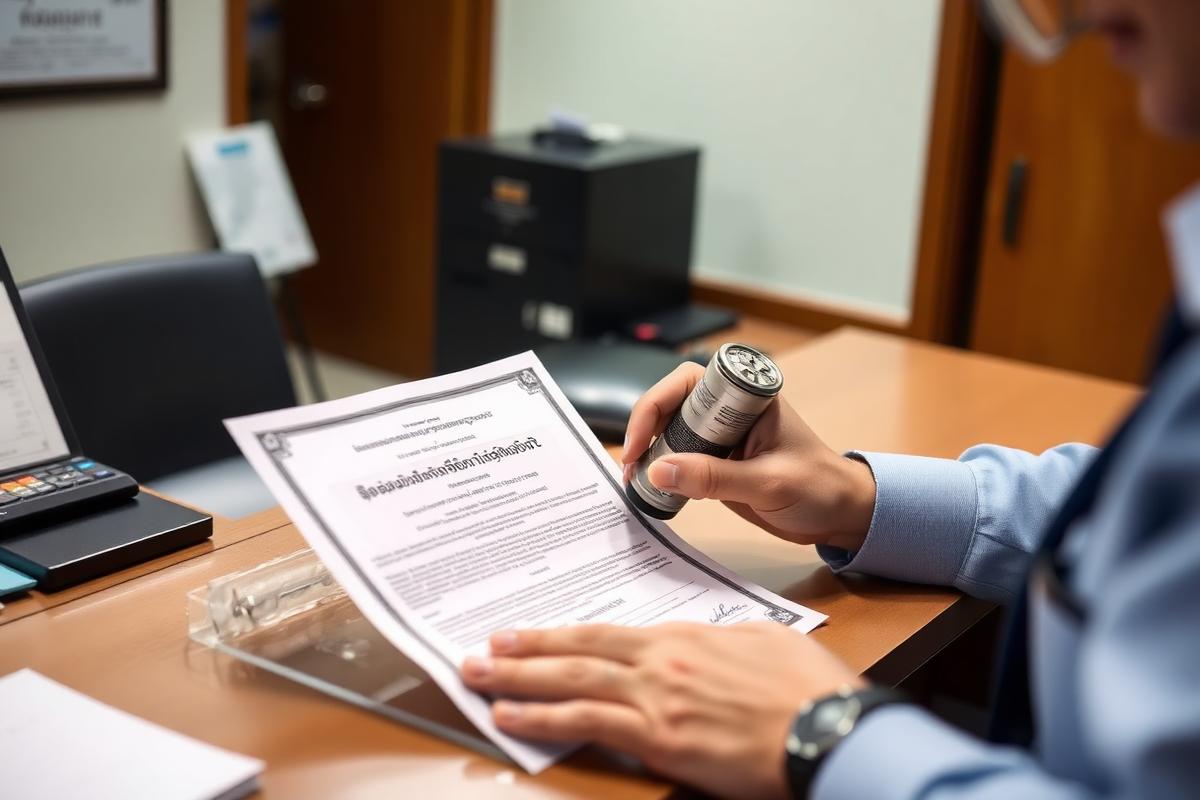
Thailand has acceded to the Apostille Convention, which enters into force on 28 February 2027. Until that date, Thai documents used abroad still follow the existing route: legalisation at the Department of Consular Affairs, then a further stamp at the destination embassy. Planning ahead lets you decide whether to file now or wait.
Prefer not to handle the queues yourself, or worried about a rejection? Send us photos of your documents for a free pre-check. We handle the full chain — obtaining certified copies, translation, certification and submission — and keep you updated at each step. Reach us on LINE, phone or email during business hours.
Apostille does not replace the existing route everywhere — it applies only between Convention parties, and only once Thailand starts issuing them.
| Route | When to use | Certifying authority | Approx. duration | Rejection risk |
|---|---|---|---|---|
| Apostille (Hague Convention 1961) | Only for Convention states — for Thai documents, Not available until 28 February 2027 | Department of Consular Affairs, MFA, as the Competent Authority | Variable, per the authority's announced service cycle | Assuming it works for every country; some receivers still require a certified translation |
| Consular legalisation + destination embassy | The destination is not a Convention party, or transition rules still apply | Department of Consular Affairs, then the destination embassy in Thailand | Variable — days to several weeks depending on embassy queues | Non-conforming translations or outdated certified copies get rejected |
| Translator-accredited route (e.g. NAATI for Australia) | The receiving authority specifies a translator standard | A translator accredited under that country's system | Variable with page count | Using an unrecognised translator means redoing the whole set |
Timelines above are practical estimates from live casework and can change with each authority's policy; confirm with the receiving authority before you plan. If you would rather not test routes by trial and error, our advisers (15+ years of casework) can assess your case and handle the whole chain for you.
Our team has worked on cross-border documents, certified translation and government liaison for over 15 years. Most rejections we see are not caused by missing paperwork but by choosing the wrong route on day one, so we always start with a case assessment.
We look at your destination, purpose and deadline, then tell you which certification route applies — and which steps you can skip.
Name spelling, consistency across documents, document age and translation format are checked before anything reaches a counter.
We sequence the steps around your appointment or travel date and flag bottlenecks in advance.
We read the refusal reasons, identify the underlying cause, and plan a resubmission that answers what the authority asked for.
Rather not learn by trial and error? Send your case details and document photos for a review — reach us on LINE, phone or email during business hours.
Total turnaround depends on the current workload of the consular office and of the destination embassy. Plan ahead rather than against a tight travel date; we can give a case-specific range by phone, LINE or email.
For member states the chain ends with an apostille and no embassy step is needed. For non-member states the document must continue through the destination country's embassy. Verify the current member list on the HCCH website.
Universities, employers and registry offices publish their own checklists. Obtaining that checklist first fixes the number of copies, the language and the certification route correctly on the first attempt.
Photograph or scan every page before submission and again after each stamp, so you have a reference if a document is lost in transit.
If a registry entry changes after the copy was issued, for example a name change or address move, the certified copy will contradict the database. Re-issue before starting.
Some countries accept only translations into their own official language, not English. Certifying an English translation first can mean repeating the entire chain.
Signature attestation is compared against the signature on the ID card or passport. A different signature style will be refused at the counter.
Bundles sealed across the binding must never be separated. Removing the staple voids the certification and the whole set has to be redone.
Requirements differ by authority and destination country and can change. Confirm current conditions with the receiving authority, or ask our team by phone, LINE or email.
These topics reflect the rules and practice of the relevant authorities and can change. Confirm with the receiving authority, or ask our team by phone, LINE or email.
One document set often moves through several stages — translation, notarial certification, legalization and finally a visa filing. The links below follow that real sequence.
Authority requirements change. Verify with the receiving authority before filing, or ask our team by phone, LINE or email.
Legalization is a chain, so choose a provider by how many links they control. Thai documents usually pass translation, Department of Consular Affairs authentication, then the destination embassy. Ask which steps are handled in-house, what the current queue at each office is, and what happens if one office rejects the file midway.
| Option | Best for | What to know |
|---|---|---|
| Walk in to the consular office yourself | Residents in Bangkok with flexible weekday time | You still need an accepted translation first, and queues vary by day. |
| Agent for the consular step only | Documents where the embassy step is not required | You must coordinate the embassy step separately if it turns out to be needed. |
| Full-chain provider | Overseas applicants and deadline-bound corporate filings | Ask which links are subcontracted and who is accountable for the whole chain. |