ข้ามไปเนื้อหาหลัก / Skip to main content
N
NYC Visa.
Visa & Translation
Case studies

Outbound visa application — case studies

Real engagements published with client permission, including the document timeline step by step.

These pages describe our actual working process using material the client permitted us to publish. Decisions rest with the receiving authority in each case, so no approval outcome is guaranteed.

No published cases for this service yet — talk to our team for an assessment of your own case.

Service Knowledge Base

Outbound visa answer bank for applicants in Thailand — US, UK and Schengen

Answers to the questions Thailand-based applicants actually ask about US visas (DS-160 plus interview), UK visas (online application plus biometrics) and Schengen visas (main-destination rule, 90/180 rule) — including the most common refusal grounds and how Thai civil documents must be translated and legalised by the Department of Consular Affairs first. Based on travel.state.gov, GOV.UK and the EU Visa Code. (30+ search topics covered)

How do I apply for a US visa from Thailand?

Complete form DS-160 online in the US Department of State CEAC system, pay the fee through the designated channel, book an interview at the US Embassy Bangkok or the Consulate General in Chiang Mai depending on your district, then attend the interview and biometrics appointment. Only a US consular officer decides the case; no document agency can approve a visa or shorten the queue.

Which country should receive my Schengen application?

File with the state of your main destination, judged by the purpose of travel and the greatest number of nights. Where nights are equal across states, file with the state of first entry. Filing with the wrong state can lead to return or refusal. Some states delegate representation to another member state in Thailand, and intake is usually handled by an appointed application centre, which has no decision-making power.

How far ahead should the document chain be started?

Work backwards from the appointment date. Certificates issued by Thai registry offices, their translation, legalisation at the Department of Consular Affairs and, where required, endorsement by the destination mission each carry their own queue. Because several missions require the underlying certificate to be recent, starting too early can be as damaging as starting too late; sequence rather than merely hurry.

What are the most common refusal grounds?

Weak evidence of ties to Thailand; financial evidence inconsistent with the stated trip or unexplained large deposits; a stated purpose that conflicts with the supporting documents; missing or improperly translated and legalised documents; and previous overstays or inaccurate statements in the application. The remedy is a coherent, internally consistent document set with a verifiable source of funds.

What causes most refusals of documents prepared in Thailand?

Inconsistency rather than insufficiency: names spelled differently across passport, civil-registry extracts and bank records; income evidence that does not match the stated occupation; itineraries that conflict with employment leave dates; and translations lacking the certification the mission requires. Reviewing the file as a whole for internal contradictions is more valuable than adding further documents.

How must Thai documents be prepared before submission?

Thai civil documents such as the house registration, birth certificate and marriage certificate usually need translation into English or the destination language, then legalisation by the Department of Consular Affairs, Ministry of Foreign Affairs. Depending on the destination, an Apostille under the Hague Convention or destination-embassy attestation may follow. Confirm the exact list with the receiving authority before starting.

Who actually decides my visa application, and what can a service provider do?

The decision belongs solely to the consular authority of the destination country; no private provider participates in it or can influence timing. What a provider can do is make the file complete, internally consistent and formatted the way that mission requires, ensure translations are certified through the correct chain, and prepare the applicant for the interview. Any claim to guarantee approval or to shorten official processing should be treated as a warning sign.

Are VFS Global and TLScontact the decision-makers?

No. They are application and biometric collection centres. The decision belongs to the embassy, consulate or immigration authority of the destination country. Any provider claiming inside contacts or the ability to fast-track a decision should be avoided.
Topics covered
วีซ่าสหรัฐอเมริกา: DS-160 กรอกอย่างไร · วีซ่า B1/B2 คนไทย · สัมภาษณ์วีซ่าอเมริกา · 214(b) ปฏิเสธวีซ่า · หลักฐานความผูกพันกับประเทศไทย · นัดสัมภาษณ์สถานทูตสหรัฐฯ กรุงเทพ · วีซ่านักเรียน F-1 ไทย · administrative processing 221(g)
วีซ่าสหราชอาณาจักร: UK Standard Visitor visa · ยื่นวีซ่าอังกฤษออนไลน์ GOV.UK · biometrics VFS อังกฤษ · maintenance funds วีซ่า UK · sponsor letter อังกฤษ · UK student visa CAS · วีซ่าอังกฤษถูกปฏิเสธ credibility
วีซ่าเชงเก้น: วีซ่าเชงเก้นยื่นประเทศไหน · main destination rule · กฎ 90/180 เชงเก้น · ประกันการเดินทางเชงเก้น · VFS TLScontact เชงเก้น · จองตั๋วและที่พักยื่นวีซ่า · อุทธรณ์วีซ่าเชงเก้น
Official references

Need your documents reviewed or your case assessed? Ask our team by phone, LINE, or email. We reply during business hours (Mon–Fri 9:00–18:00, Sat 9:00–15:00, ICT).
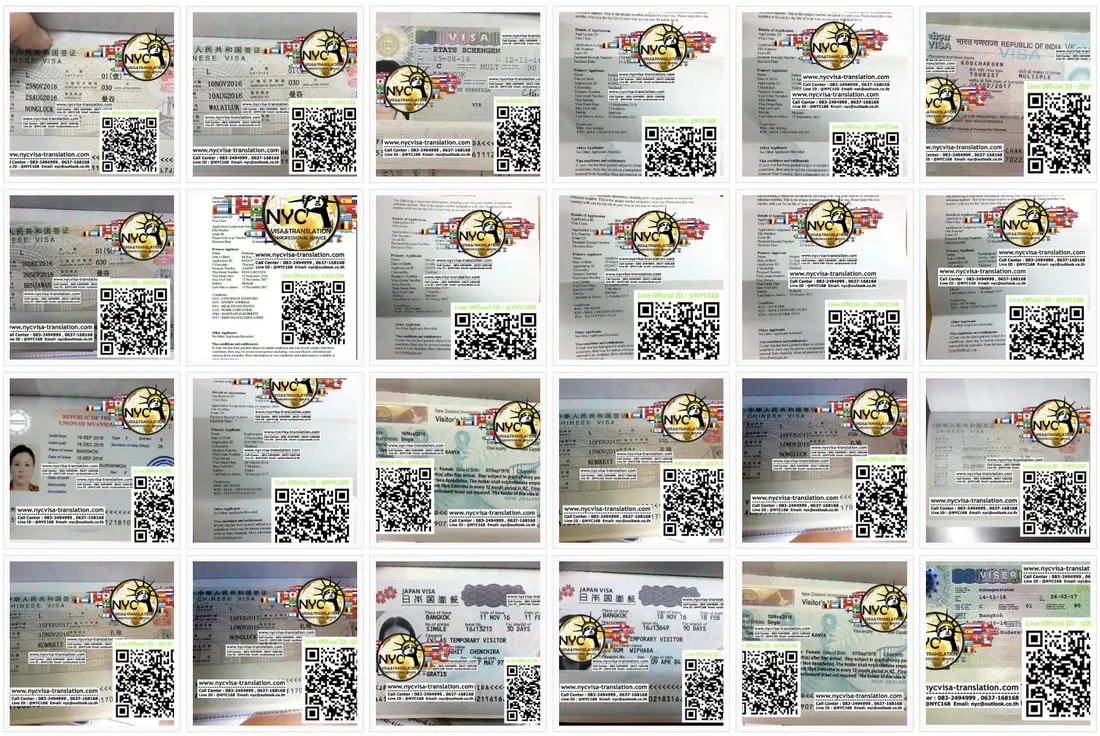
Example of a long-stay visa obtained by an applicant
Example of a long-stay visa obtained by an applicantFrom actual casework by the NYC Visa & Translation team
Practical Q&A

Practical questions · Near me / DIY / Required documents

Where do I lodge a visa application — must I go to the embassy?

Many countries outsource intake to visa application centres (VFS Global, TLScontact, BLS) with offices in Bangkok and some provinces; others accept lodgement at the embassy or fully online. Channels change by embassy announcement, so confirm the current route before booking. We can pre-check your document set and arrange appointments from any of our three offices.

Can I apply myself, or do I need an agency?

You can always apply yourself; no country requires an agent, and no agent can guarantee approval because the decision is at the consular officer's discretion. The value of assistance is assembling the file exactly to the official checklist, correct translation and certification format, and a focused cover letter.

What are the baseline documents?

Typically a passport with the validity and blank pages the destination requires, the completed application form, photos to the destination's specification, financial evidence for the stated period, proof of employment or study, travel and accommodation plans, and health insurance where required. Always follow that embassy's official checklist, as requirements differ by country.
Practical advice & cautions

Visa and immigration matters: advice and cautions

Before you start
  • Read the official conditions first

    Visa conditions change. Check the deciding authority's latest announcement, then use our service to prepare documents and translations that match those conditions.

  • Make funds explainable

    Large deposits made shortly before filing attract questions. Support them with evidence of income and use statements bearing the bank's original seal.

  • Check passport validity and blank pages

    Many countries set a minimum remaining validity and number of blank pages. Verify before your appointment.

  • Order documents to the authority's checklist

    Assembling the bundle in the required order with an index speeds up assessment and reduces requests for more documents.

Common reasons documents get rejected
  • Expired supporting documents

    Civil registry extracts, medical certificates and police clearances have limited validity; old copies make the bundle incomplete.

  • Believing guaranteed-approval claims

    No provider can guarantee an outcome; only the immigration authority or embassy decides. Our role is to make the file accurate and complete so avoidable rejections are reduced.

  • Ignoring post-approval obligations

    Periodic reporting, address notification and work conditions are ongoing duties that affect the next extension.

  • Refiling immediately without fixing the cause

    Analyse the refusal grounds and address them; resubmitting the same file usually produces the same result.

Requirements differ by authority and destination country and can change. Confirm current conditions with the receiving authority, or ask our team by phone, LINE or email.

What people search for

Frequently searched topics about visas and immigration

A visa is not a work authorisation
Holding a visa does not automatically grant work rights; a work permit is a separate matter.
Notification of residence for foreign nationals
House owners or occupiers must notify the stay of foreign nationals under Thai immigration law.
Documents required for a visa application
Checklists are set by the embassy or receiving authority; always follow their current published notice.
Refusal and reapplication
Read the stated reason first and address the actual cause rather than resubmitting the same file.

These topics reflect the rules and practice of the relevant authorities and can change. Confirm with the receiving authority, or ask our team by phone, LINE or email.

Related services

What clients usually handle next

One document set often moves through several stages — translation, notarial certification, legalization and finally a visa filing. The links below follow that real sequence.

External authority references

Authority requirements change. Verify with the receiving authority before filing, or ask our team by phone, LINE or email.