Answers to the questions Thailand-based applicants actually ask about US visas (DS-160 plus interview), UK visas (online application plus biometrics) and Schengen visas (main-destination rule, 90/180 rule) — including the most common refusal grounds and how Thai civil documents must be translated and legalised by the Department of Consular Affairs first. Based on travel.state.gov, GOV.UK and the EU Visa Code. (30+ search topics covered)
What causes most refusals of documents prepared in Thailand?
Inconsistency rather than insufficiency: names spelled differently across passport, civil-registry extracts and bank records; income evidence that does not match the stated occupation; itineraries that conflict with employment leave dates; and translations lacking the certification the mission requires. Reviewing the file as a whole for internal contradictions is more valuable than adding further documents.
What should be done after a visa refusal before reapplying?
Do not resubmit the same file. First decode the refusal notice, which normally cites the ground or code relied on, then re-test three axes: a purpose of travel that is documented, funds whose origin is traceable, and ties to Thailand that make return credible. A new application should add genuinely new evidence rather than reordering the old bundle, and should address the change openly, since missions keep the applicant's history. Diagnosing the real ground before reapplying matters more than volume of paperwork.
Which Schengen country should I apply to?
Under the EU Visa Code you apply to the country that is your main destination — where you spend the longest time or which is the main purpose of the trip. If several stays are equal in length, apply to the country you enter the Schengen area through first. Filing with the wrong state can lead to refusal for lack of competence.
What are the most common refusal grounds?
Weak evidence of ties to Thailand; financial evidence inconsistent with the stated trip or unexplained large deposits; a stated purpose that conflicts with the supporting documents; missing or improperly translated and legalised documents; and previous overstays or inaccurate statements in the application. The remedy is a coherent, internally consistent document set with a verifiable source of funds.
How does a US visa differ in practice from a Schengen visa?
The US process centres on the online DS-160 form and an interview at the embassy or consulate, and the law presumes that a temporary-visa applicant intends to immigrate until the officer is satisfied otherwise. Weight therefore falls on interview answers and ties to Thailand. Schengen decisions turn mainly on the completeness of the documentary file against the published checklist, and interviews are not standard.
How far ahead should the document chain be started?
Work backwards from the appointment date. Certificates issued by Thai registry offices, their translation, legalisation at the Department of Consular Affairs and, where required, endorsement by the destination mission each carry their own queue. Because several missions require the underlying certificate to be recent, starting too early can be as damaging as starting too late; sequence rather than merely hurry.
How far ahead should an outbound visa file be started?
Allow time for the application centre's appointment queue, the embassy's processing period, and the production of source documents such as employment and financial letters, translations and, where needed, consular legalisation. The factors most often underestimated are appointment scarcity in peak season and issuing bodies that take several working days. Starting early also leaves room to correct name spellings or document formats. Processing itself remains at the deciding authority's discretion and cannot be accelerated by any agent.
What should be done differently after a previous refusal?
Keep the full refusal notice and read the stated grounds closely, because refiling the same bundle usually produces the same outcome. Declare the earlier refusal truthfully on the new form; concealment is treated as misrepresentation and carries heavier consequences. Then strengthen the specific weakness identified — ties to Thailand, source of funds, or consistency between the itinerary and bookings. No adviser can guarantee the outcome of a fresh decision.
วีซ่าเชงเก้น: วีซ่าเชงเก้นยื่นประเทศไหน · main destination rule · กฎ 90/180 เชงเก้น · ประกันการเดินทางเชงเก้น · VFS TLScontact เชงเก้น · จองตั๋วและที่พักยื่นวีซ่า · อุทธรณ์วีซ่าเชงเก้น
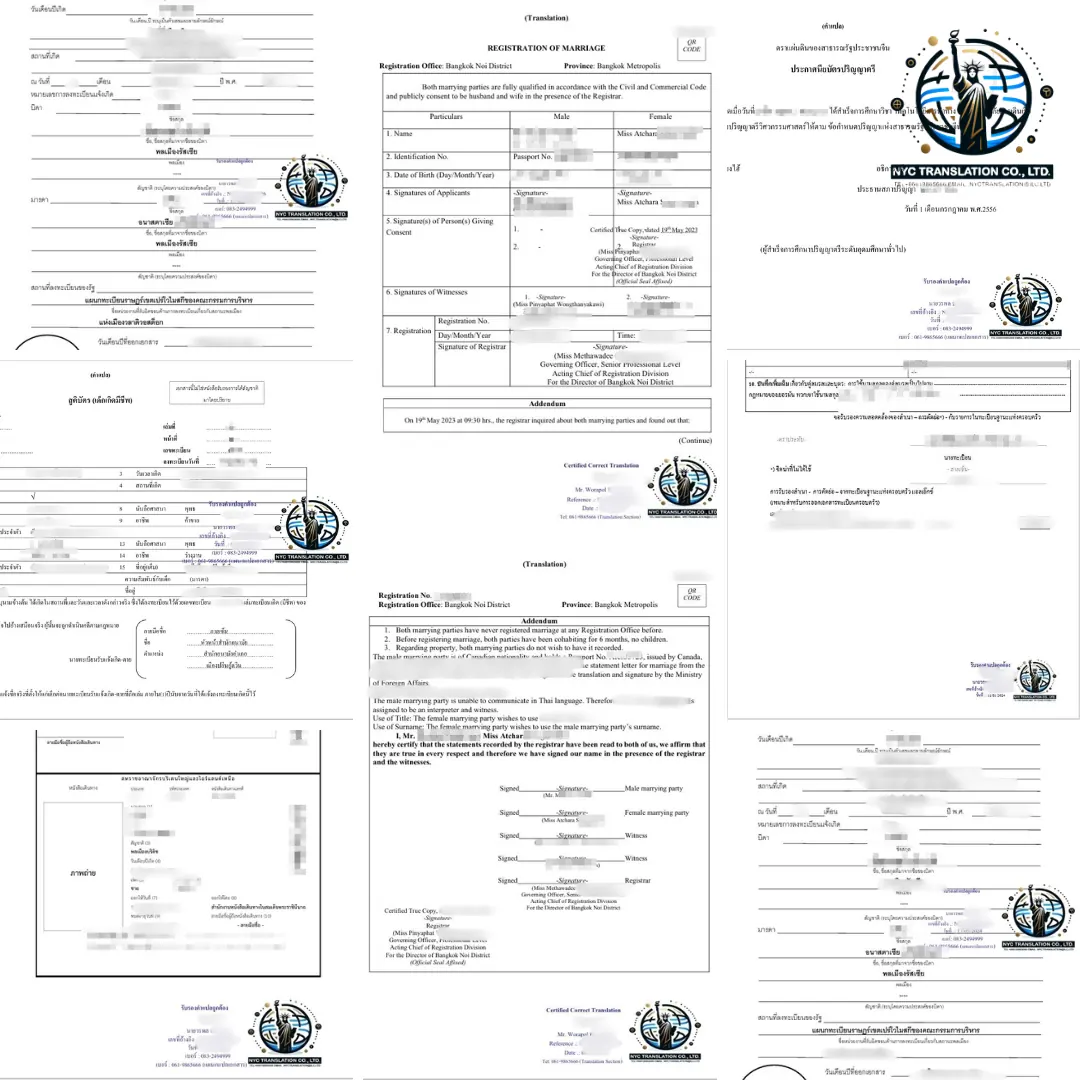
เอกสารไทยที่ต้องแปล/รับรองก่อนยื่น: แปลทะเบียนบ้านยื่นวีซ่า · แปลสูติบัตรรับรองกงสุล · แปลทะเบียนสมรสยื่นวีซ่า · แปลหนังสือรับรองการทำงาน · แปลสเตทเมนต์ธนาคาร · หนังสือยินยอมให้เด็กเดินทาง · Apostille เอกสารไทย · ตรวจประวัติอาชญากรรมยื่นวีซ่า
วีซ่าสหรัฐอเมริกา: DS-160 กรอกอย่างไร · วีซ่า B1/B2 คนไทย · สัมภาษณ์วีซ่าอเมริกา · 214(b) ปฏิเสธวีซ่า · หลักฐานความผูกพันกับประเทศไทย · นัดสัมภาษณ์สถานทูตสหรัฐฯ กรุงเทพ · วีซ่านักเรียน F-1 ไทย · administrative processing 221(g)
Need your documents reviewed or your case assessed? Ask our team by phone, LINE, or email. We reply during business hours (Mon–Fri 9:00–18:00, Sat 9:00–15:00, ICT).