ข้ามไปเนื้อหาหลัก / Skip to main content
N
NYC Visa.
Visa & Translation
Case studies

Certified translation — case studies

Real engagements published with client permission, including the document timeline step by step.

These pages describe our actual working process using material the client permitted us to publish. Decisions rest with the receiving authority in each case, so no approval outcome is guaranteed.

No published cases for this service yet — talk to our team for an assessment of your own case.

Service Knowledge Base

Certified translation in Thailand — questions clients actually ask

First-party answers on language coverage, Thai civil-registry documents, translator certification, MFA legalisation and onward embassy attestation. (53+ search topics covered)

What makes a translation "certified" for Thai official use?

In Thai practice a translation is accepted when it is complete, faithful to the layout of the original, and accompanied by the translator's declaration with name, signature and contact details; for consular use the translator's signature is then certified by the Department of Consular Affairs. Some foreign authorities additionally require a sworn or court-appointed translator of their own country, which is a separate requirement we identify before starting.

How long does the process take?

Translation itself is usually a few business days depending on volume and language pair. MFA legalisation has both standard and express channels with different cut-off times and fees — check the Department of Consular Affairs website for current schedules before booking a visa appointment.

How is pricing calculated?

By page or word count, subject matter, language pair and turnaround, plus the actual government fees incurred at the legalisation and embassy stages. A line-by-line quotation is issued before work starts.

What makes a translation 'certified' in Thailand?

Thailand has no single sworn-translator registry. Acceptance depends on the receiving authority: some accept a translator's certification or a Notarial Services Attorney's attestation, while documents used abroad normally require legalisation by the Legalisation Division, Department of Consular Affairs, Ministry of Foreign Affairs, and often a further attestation at the destination embassy.

Foreign documents used in Thailand — what is the route?

The document is normally authenticated in the issuing country and attested by the Royal Thai Embassy or Consulate there, then translated into Thai and submitted for translation legalisation at the Department of Consular Affairs in Thailand.

What is the difference between a certified translation and an MFA-certified translation?

A certified translation is signed by the translator attesting the text matches the source. An MFA legalisation stamp from the Department of Consular Affairs is an official verification of that translation against the original, which most embassies and foreign authorities require. Confirm the level your receiving office needs before work starts so the file is not repeated.

Can Thailand issue an Apostille?

Thailand deposited its instrument of accession to the 1961 Apostille Convention on 30 June 2026, and the Convention enters into force for Thailand on 28 February 2027. Until that date Thai documents still follow the two-step route: legalisation by the Department of Consular Affairs, then legalisation by the destination country's embassy in Thailand. Until then, Thai documents follow the traditional chain: MFA legalisation, then destination-embassy attestation.

What are the most common rejection reasons?

Name spelling that does not match the passport, missing lines or stamps in the translation, and source documents that were not certified by the issuing authority. Each is avoidable with a pre-submission check of the original.
Topics covered
ชนิดเอกสารราชการที่แปลบ่อย: แปลสูติบัตร · แปลทะเบียนบ้าน · แปลบัตรประชาชน · แปลทะเบียนสมรส · แปลใบหย่า · แปลใบเปลี่ยนชื่อ-สกุล · แปลหนังสือรับรองโสด · แปลใบมรณบัตร · แปลทรานสคริปต์ · แปลปริญญาบัตร · แปลหนังสือรับรองบริษัท · แปลใบขับขี่ · แปลใบรับรองแพทย์ · แปลหนังสือรับรองการทำงาน · แปลสเตทเมนต์ธนาคาร
คู่ภาษาที่ขอมากที่สุด: แปลไทย-อังกฤษ · แปลไทย-จีน · แปลไทย-ญี่ปุ่น · แปลไทย-เกาหลี · แปลไทย-เยอรมัน · แปลไทย-ฝรั่งเศส · แปลไทย-สเปน · แปลไทย-อิตาลี · แปลไทย-รัสเซีย · แปลไทย-อาหรับ · แปลไทย-เวียดนาม · แปลไทย-พม่า
ขั้นตอนรับรองและนิติกรณ์: นิติกรณ์กรมการกงสุล · legalization ถนนแจ้งวัฒนะ · รับรองเอกสารกระทรวงการต่างประเทศ · รับรองสถานทูต · notary รับรองคำแปล · certified true copy · apostille ประเทศไทย · แปลเอกสารส่งต่างประเทศ
Official references

Need your documents reviewed or your case assessed? Ask our team by phone, LINE, or email. We reply during business hours (Mon–Fri 9:00–18:00, Sat 9:00–15:00, ICT).
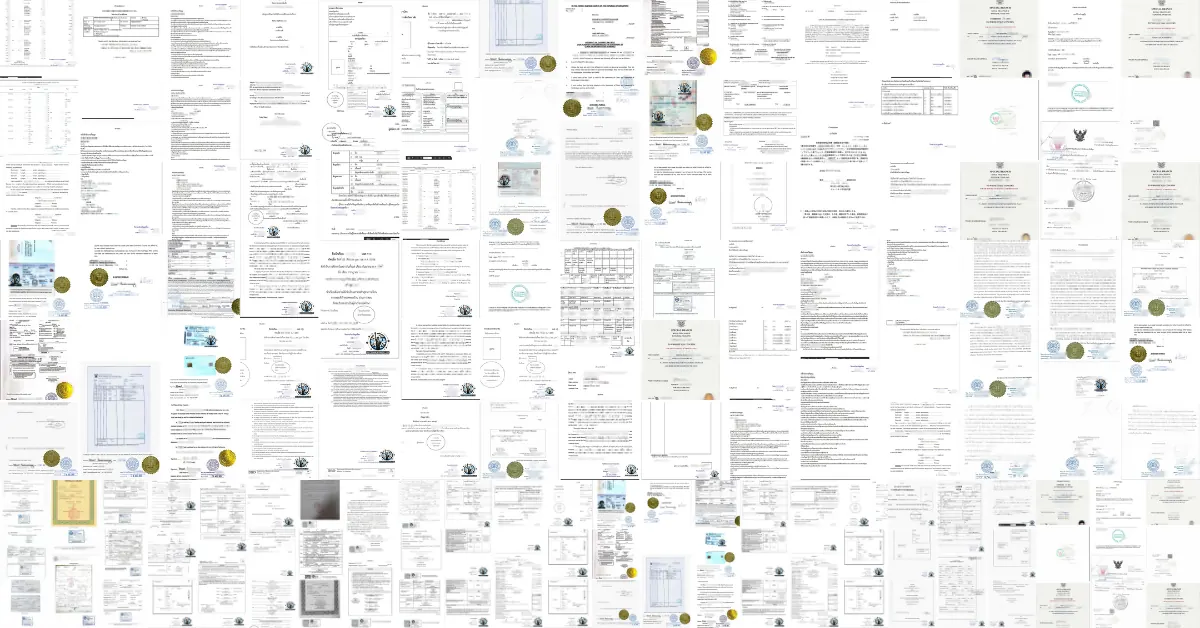
Official document translation with a certificate of translation
Official document translation with a certificate of translationFrom actual casework by the NYC Visa & Translation team
Practical Q&A

Practical questions · Near me / DIY / Required documents

How do I find certified translation near me?

You usually do not need to travel: documents are accepted as scans and returned by courier nationwide. If you prefer to meet in person, we have service points at Lat Phrao 95 (Bangkok), Khon Kaen and Udon Thani, plus hand-over meeting points near city rail stations.

Can I translate it myself and have it certified afterwards?

It depends on the recipient. The Department of Consular Affairs certifies a translation by checking it against the original rather than by translator identity, but many embassies and foreign authorities require an independent or accredited translator. Check the destination's rule before self-translating to avoid a rejection cycle.

What do you need from me to start?

Sharp colour scans of every page including seals and signatures, the English spelling of names exactly as printed in the passport, the receiving authority and country, and your deadline. Sending any previously certified translation helps keep terminology and name spelling consistent across the set.
Practical advice & cautions

Document translation: what to prepare and what gets rejected

Before you start
  • Match the passport spelling exactly

    Translations must reproduce the given name and surname exactly as printed in the passport you will submit, not a fresh transliteration. Always send the passport bio page together with the documents.

  • Order fresh certified copies

    Many civil-registry and court documents are only accepted if issued recently. Request a newly certified copy before translation rather than reusing an old photocopy.

  • Send full-page colour scans

    Scan in colour at 300 dpi or higher, showing seals, signatures, document numbers and page edges, including any stamped reverse side. Illegible areas must be marked as such in the translation, which invites rejection.

  • Tell us the fixed terms

    Company names, institution names, academic titles and drug names should follow the English form already used in your other filings so the whole bundle stays consistent.

Common reasons documents get rejected
  • Using the wrong certification system

    A consular-certified Thai translation does not replace a NAATI translation for Australian authorities, and a NAATI stamp is not a Thai government certification. Choose the system that matches the destination from the start.

  • Leaving page elements untranslated

    Seals, signatures, reverse-side text and marginal notes must all be rendered or described. Omitting them is one of the most common rejection causes.

  • Inconsistent names across the bundle

    If you have changed your name or used different spellings, include the official name-change certificate and its translation; otherwise the authority may treat the documents as belonging to different people.

  • Self-translated documents

    Most authorities refuse translations produced by the applicant or a relative, even if accurate, because there is no identifiable certified translator behind them.

Requirements differ by authority and destination country and can change. Confirm current conditions with the receiving authority, or ask our team by phone, LINE or email.

What people search for

Frequently searched topics about certified translation

Thai to English translation for embassies
Each embassy sets its own accepted translator and certification format; request the requirement in writing first.
Certified translation for legalisation
Translations submitted for legalisation must mirror the original line by line, including seals and signatures.
Freshly issued civil records for translation
Many receiving bodies limit how old the source document may be, so obtain a new certified copy before translating.
Name spelling matching the passport
Names must match the passport page character for character; a single-letter difference is a common rejection reason.

These topics reflect the rules and practice of the relevant authorities and can change. Confirm with the receiving authority, or ask our team by phone, LINE or email.

Related services

What clients usually handle next

One document set often moves through several stages — translation, notarial certification, legalization and finally a visa filing. The links below follow that real sequence.

External authority references

Authority requirements change. Verify with the receiving authority before filing, or ask our team by phone, LINE or email.