Ministry of Justice (MoJ) Translation Service → Court Judgment
Court Judgment
Certified translation of civil, criminal, family or administrative court judgments — legalized via MoJ + MFA + embassy.
Certified translation of civil, criminal, family or administrative court judgments — legalized via MoJ + MFA + embassy.
Court Judgment at NYC Visa & Translation: starting from service-list rate, 5–15 business days (Rush 24–72h available). Fully bundled translation + MoJ/MFA/embassy/Apostille legalization + worldwide DHL. ance guarantee.
Send scan / photo via LINE or email — we map the correct legalization route for your destination within 1 business hour.
Drop at our Ladprao 95 office, use our Bangkok messenger, or ship EMS nationwide.
Certified translator + 2-stage QA in 2–3 business days. Languages: EN/CN/JP/KR/DE/FR/ES/RU/AR + NAATI.
MoJ / Medical Council / MoL / SSO / DSDW / Civil Registrar — depending on document type.
Department of Consular Affairs — Apostille (Hague Convention since 14 Dec 2024) or destination legalization.
Destination embassy — required for non-Apostille countries: China, India, UAE, Vietnam, etc.
DHL Worldwide Express (1–3 days), EMS within Thailand, or pick-up at Ladprao 95.
| Item | Price (THB) |
|---|---|
| Court doc translation (TH ↔ EN) | 1,200 – 3,500 / page |
| Other languages (CN/JP/KR/DE/FR…) | 1,800 – 5,500 / page |
| Notary Public | 2,500 – 8,000 |
| MoJ Legal Affairs fee | 400 – 1,200 / set |
| MoJ delivery service | 3,500 – 6,000 |
| MFA + Apostille fee | 200 – 800 / set |
| MFA delivery service | 2,500 – 5,000 |
| Embassy fee | 1,800 – 2,600 / set |
| Embassy delivery service | 5,000 – 12,000 |
| Worldwide DHL shipping | 2,500 |
Standard: 5–10 business days (translation + source ministry). Add 5–10 days for MFA + Apostille, or 7–14 days for embassy chain. Rush service (24–72h, +50–100%) available for urgent litigation.
Starting from service-list rate. Translation and certification bundled; government fees passed through at cost (MoJ 400–1,200, MFA 200–800, embassy 1,800–2,600). No hidden charges, full receipts and tax invoices for every stage.
Accepted worldwide in 195 countries. 125+ Hague Apostille member states (since 14 Dec 2024) bypass embassy attestation; remaining countries use legalization chain. We confirm the exact route for your destination before starting.
No — fully online end-to-end: send scans via LINE/email → mail originals by EMS or Kerry → pay by bank transfer / credit card / PromptPay → receive by DHL or EMS anywhere in Thailand or worldwide. Ideal for upcountry and overseas clients.
Yes — we serve expats of all nationalities. Service languages: Thai, English, Chinese, Japanese, Korean, German, French, Russian, Arabic. Interpreters and specialist lawyers available for complex cases.
Quality guarantee: if a document is rejected by the destination authority due to our error, NYC re-does it free of charge. Real across 50,000+ document sets in the last 36 months.
Court divorce decree translation for visa, remarriage or marriage registration abroad — full MoJ + MFA + embassy chain.
Sole / joint custody order translation — required to take a Thai child abroad or change citizenship.
Adoption decree + DSDW (Ministry of Social Development) certification — for foreigners adopting Thai children.
MoJ-authorized Power of Attorney for litigation, inheritance or property sale in Thailand from overseas.
Court-issued criminal case status certificate — distinct from Police Clearance, often required for PR / citizenship.
Will and grant of probate translation — to claim inheritance assets located abroad.
Free consultation, case assessment within 1 business hour, all questions answered before engagement.
Answers on translations and certifications for use in Thai and foreign court proceedings — translation format, attorney attestation, onward MFA legalisation and preparing a complete bundle before the hearing date. (26+ search topics covered)
Need your documents reviewed or your case assessed? Ask our team by phone, LINE, or email. We reply during business hours (Mon–Fri 9:00–18:00, Sat 9:00–15:00, ICT).
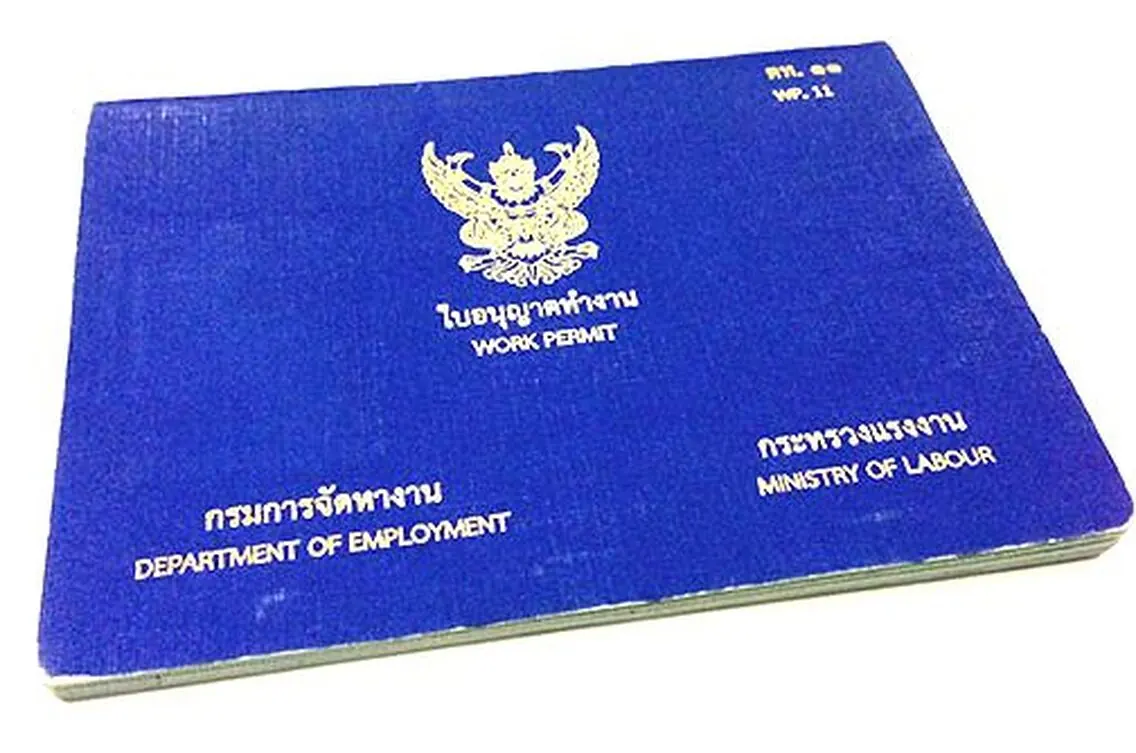
Documents used in Thai court proceedings generally require a translator registered with the Ministry of Justice, and terminology must stay consistent across the entire case file.
Prefer not to handle the queues yourself, or worried about a rejection? Send us photos of your documents for a free pre-check. We handle the full chain — obtaining certified copies, translation, certification and submission — and keep you updated at each step. Reach us on LINE, phone or email during business hours.
Judgments, court orders, and case certificates follow different request paths. Picking the right one early avoids a full re-filing cycle.
| Route | When to use | Certifying authority | Approx. duration | Rejection risk |
|---|---|---|---|---|
| Certified copy from the court that heard the case | You need the judgment or order for another authority, in Thailand or abroad | The court that issued the judgment | Variable, depending on each court's caseload | Uncertified copies are refused by the MFA and embassies |
| Certified copy plus translation and legalisation for overseas use | The receiving body is a foreign court or registry | Thai court, then the MFA, then the destination embassy | Variable — allow several weeks across all stages | Legal terminology mistranslated is a frequent rejection point at the MFA counter |
| Certificate from a Ministry of Justice agency | You need confirmation of case status or enforcement matters | The responsible agency under the Ministry of Justice | Variable by request type | Filing with the wrong agency costs an entire processing cycle |
Timelines above are practical estimates from live casework and can change with each authority's policy; confirm with the receiving authority before booking travel. If you would rather not test routes by trial and error, our advisers can assess which route fits your case.
Our team has worked on cross-border documents, certified translation and government liaison for over 15 years. Most rejections we see are not caused by missing paperwork but by choosing the wrong route on day one, so we always start with a case assessment.
We look at your destination, purpose and deadline, then tell you which certification route applies — and which steps you can skip.
Name spelling, consistency across documents, document age and translation format are checked before anything reaches a counter.
We sequence the steps around your appointment or travel date and flag bottlenecks in advance.
We read the refusal reasons, identify the underlying cause, and plan a resubmission that answers what the authority asked for.
Rather not learn by trial and error? Send your case details and document photos for a review — reach us on LINE, phone or email during business hours.
Certification systems are not interchangeable. Australian authorities require NAATI-certified translators, while documents used inside Thailand or filed at embassies in Thailand usually need translation certification by the Department of Consular Affairs. Tell us the receiving authority and country first.
Company names, institution names, academic titles and drug names should follow the English form already used in your other filings so the whole bundle stays consistent.
Many civil-registry and court documents are only accepted if issued recently. Request a newly certified copy before translation rather than reusing an old photocopy.
Translations must reproduce the given name and surname exactly as printed in the passport you will submit, not a fresh transliteration. Always send the passport bio page together with the documents.
Most authorities refuse translations produced by the applicant or a relative, even if accurate, because there is no identifiable certified translator behind them.
If you have changed your name or used different spellings, include the official name-change certificate and its translation; otherwise the authority may treat the documents as belonging to different people.
Seals, signatures, reverse-side text and marginal notes must all be rendered or described. Omitting them is one of the most common rejection causes.
A consular-certified Thai translation does not replace a NAATI translation for Australian authorities, and a NAATI stamp is not a Thai government certification. Choose the system that matches the destination from the start.
Requirements differ by authority and destination country and can change. Confirm current conditions with the receiving authority, or ask our team by phone, LINE or email.
These topics reflect the rules and practice of the relevant authorities and can change. Confirm with the receiving authority, or ask our team by phone, LINE or email.
One document set often moves through several stages — translation, notarial certification, legalization and finally a visa filing. The links below follow that real sequence.
Authority requirements change. Verify with the receiving authority before filing, or ask our team by phone, LINE or email.