ข้ามไปเนื้อหาหลัก / Skip to main content
N
NYC Visa.
Visa & Translation
✒️ Add-on Service

Apostille Certification

Apostille certification for documents used in Hague Convention member countries

Overview

Apostille certification for foreign documents used in Hague Convention 1961 member countries (125+ states including China, Hong Kong, US, UK, Australia, and all EU). We process via US Secretary of State, UK FCDO, Australia DFAT, China MOFA, French Préfecture/Cour d'Appel, German Landgericht, and more through NYC's global partner network.

Price
contact our team
per document (incl. govt + partner + shipping)
Turnaround
7–21 business days (varies by country)
Contact
Free consultation 24/7
What we do
  • US documents — Secretary of State + Federal US Department of State
  • UK documents — FCDO Legalisation Office
  • All EU (Schengen 29 + UK + EEA)
  • China + Hong Kong (China MOFA + High Court of HK)
  • Foreign-born child birth certificate apostille
  • Foreign degrees + transcripts apostille
When to use
  • Child born abroad — apostille birth certificate for Thai use
  • Foreign degree — apostille to apply for jobs/grad school in Thailand
  • Marriage in Thailand — apostille foreign single-status certificate
  • Overseas divorce — apostille the court order
  • Foreigner setting up Thai company — apostille corporate docs + passport
  • International adoption — apostille home study + background check
Required
  • Original document (issued in source country)
  • Notarization in source country (for personal documents)
  • Power of Attorney to NYC + partners
  • Delivery address in Thailand or abroad
Workflow
  1. 1Send document scans — we map the apostille route
  2. 2Client mails originals to Thailand, or our partner collects in source country
  3. 3Notary (if needed) → State Apostille → Federal (for US)
  4. 4Return to Thailand → translate → MOFA Thailand certify translation (if used in TH)
  5. 5Deliver to client or file at Thai authority/embassy
FAQ

How long for US apostille?

Varies by state: California/New York/Texas 3–5 business days, some states 10–14 days. Federal documents (FBI background check) go through US Dept. of State DC adding 7–10 days. Total with shipping back to Thailand: 14–21 business days.

Are Chinese apostilles accepted in Thailand?

Yes — China joined the Apostille Convention in Nov 2023. Thai authorities now accept China apostilles directly without re-legalization at the Royal Thai Embassy Beijing, saving 2–3 weeks. NYC handles China MOFA + Hong Kong High Court.

Translate before or after apostille?

After — apostille is issued in the source language. Translate in Thailand + MOFA Thailand certifies the translation for Thai government use. For use in a third country, translate there with a sworn translator.

Can apostilled FBI check be used for Thai work permit?

Yes — used for teacher work permits and professional licenses. We handle FBI channeler + apostille + Thai translation + MOFA Thailand end-to-end in 14–21 business days.

Do apostilles expire?

No legal expiration, but destination authorities often require issuance within 6–12 months. Plan timing accordingly.

Service Knowledge Base

Apostille for Thai Documents — Knowledge Base

Common questions about apostille for Thai documents, before and after the Convention enters into force on 28 February 2027. (8+ search topics covered)

Which documents fall outside the Convention?

The Convention covers public documents such as civil registry records, court decisions, documents issued by public authorities and private documents certified by an authorised officer. Documents executed by diplomatic or consular agents, and certain commercial or customs documents, fall outside its scope. A purely private document — a power of attorney you drafted yourself, for example — must first have the signature certified by an authorised officer before it can qualify for an apostille.

Can I already get an apostille on a Thai document?

Not yet. Thailand has acceded to the Apostille Convention, but it enters into force on 28 February 2027. Until then, Thai documents for overseas use still follow the existing chain: legalisation at the Department of Consular Affairs, Ministry of Foreign Affairs, followed by a further stamp at the destination country's embassy or consulate. If your deadline falls near the transition, ask the receiving authority in writing which form it will accept and prepare accordingly.

Should I file now or wait until 2027?

If the document must be used before 28 February 2027, start the current route now; properly legalised documents remain usable for as long as the receiving body allows. If your use date falls after entry into force and the destination is a Convention party, waiting usually removes a step and shortens the chain. Where the timing straddles the date, prepare the underlying source documents now so you can take either route as soon as the recipient confirms the format it accepts.

How much of this can your team handle?

Our consultants have handled cross-border document chains for over 15 years and can take the matter end to end: confirming which format the destination accepts, obtaining freshly issued certified copies, translating with two-stage review so names match the passport exactly, filing for legalisation, coordinating with the destination embassy and returning the file to you. You also get advice on whether to file now or wait for the apostille route. Send photos of your documents for a free pre-check first.

After entry into force, will embassy legalisation still be required?

It depends on the destination. If the destination is a Convention party that has not objected to Thailand's accession, the apostille issued by the competent Thai authority replaces the embassy stamp. If the destination is not a party, the current legalisation-plus-embassy route continues to apply. Always check the current party list published by the HCCH and confirm with the specific receiving office, because internal rules of universities, registries and immigration bodies can be stricter than the treaty baseline.

Does an apostille certify the translation?

No. An apostille certifies only the authenticity of the signature, the capacity of the signatory and the seal on a public document. It says nothing about the content or about translation accuracy. Many receiving bodies therefore still require a translation prepared by a translator they accept. Some want the apostille placed on the source document before translation, others want the translation certified and then apostilled. Confirm the required order first: reversing it is the most common cause of rejection.
Topics covered
อะโพสทิลไทย: apostille ไทย · อนุสัญญากรุงเฮก · 28 กุมภาพันธ์ 2570 · ยกเลิกรับรองสถานทูต
เส้นทางปัจจุบัน: นิติกรณ์กรมการกงสุล · รับรองสถานทูต · legalization · แปลรับรอง

Need your documents reviewed or your case assessed? Ask our team by phone, LINE, or email. We reply during business hours (Mon–Fri 9:00–18:00, Sat 9:00–15:00, ICT).

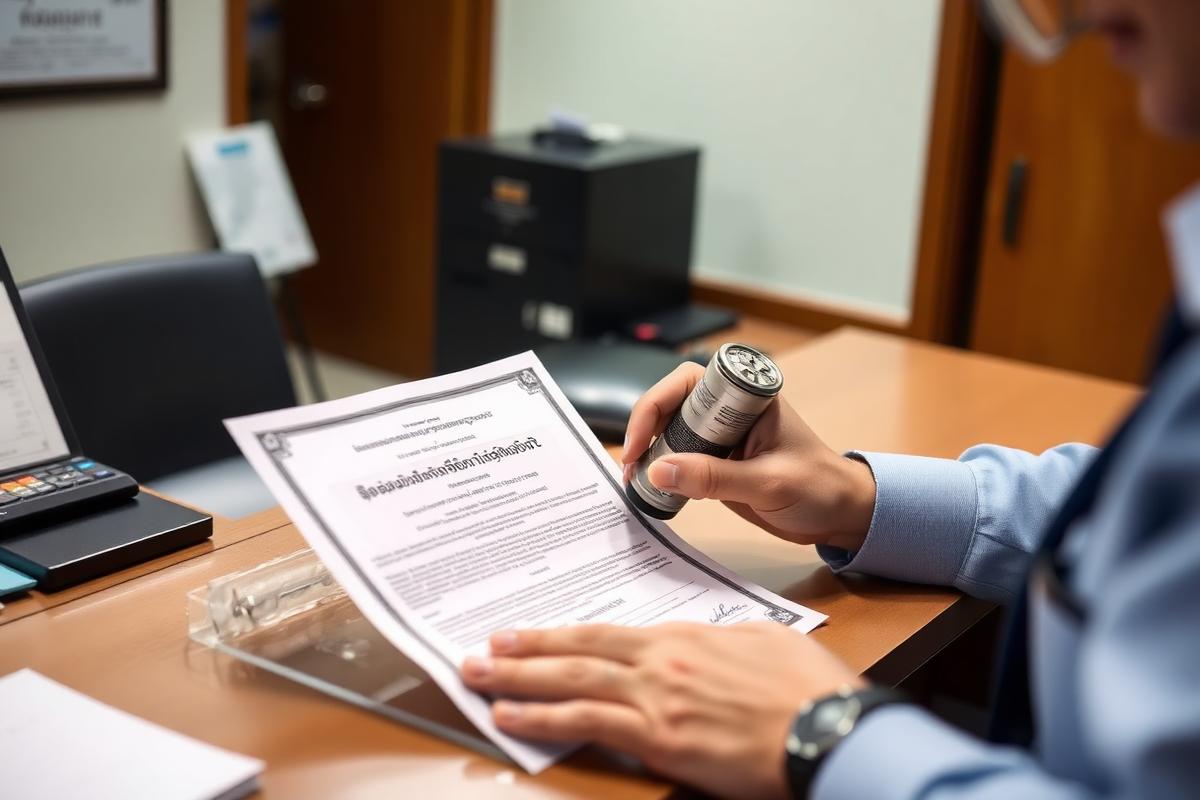
Officer stamping a Thai official document for overseas use (Thailand's apostille takes effect 28 Feb 2027)
Officer stamping a Thai official document for overseas use (Thailand's apostille takes effect 28 Feb 2027)From actual casework by the NYC Visa & Translation team
Service Playbook

Apostille for Thai documents — preparing for the entry into force

Thailand has acceded to the Apostille Convention, which enters into force on 28 February 2027. Until that date, Thai documents used abroad still follow the existing route: legalisation at the Department of Consular Affairs, then a further stamp at the destination embassy. Planning ahead lets you decide whether to file now or wait.

Documents to prepare

  • The original or a freshly issued certified copy from the issuing office (district registrar, university, court)
  • An English translation matching the original line by line, including stamps and signatures
  • A copy of the document holder's passport so spellings stay consistent
  • Any written requirement from the receiving authority
  • A power of attorney if someone files on your behalf

Step-by-step process

  1. 1. Check whether the destination is a member state Non-member states will still need consular legalisation plus embassy attestation after the entry into force.
  2. 2. Obtain a fresh certified copy Freshly issued copies carry verifiable signatures and stamps.
  3. 3. Translate and proofread twice Numbers, dates, authority names and passport spelling are checked by a second reviewer.
  4. 4. File under the route currently in effect Today that means legalisation at the Department of Consular Affairs followed by the destination embassy or consulate.
  5. 5. Plan for the transition window If your deadline sits close to 28 February 2027, prepare for both routes so travel plans are not disrupted.

Pitfalls and rejection causes

  • An apostille is not available yet — before the entry-into-force date, authorities accept only the existing legalisation route.
  • An apostille certifies the signature and seal, not translation accuracy; the receiving body may still request a certified translation.
  • Non-member states will continue to require embassy attestation.
  • Documents issued long ago are often sent back with a request for a fresh copy.

Tips from our team

  • Tell us upfront if several countries are involved so one set of originals can serve them all.
  • Keep colour scans of every stamped page before the documents leave Thailand.
  • Ask the receiving authority in writing which certification they accept and keep the reply.

Prefer not to handle the queues yourself, or worried about a rejection? Send us photos of your documents for a free pre-check. We handle the full chain — obtaining certified copies, translation, certification and submission — and keep you updated at each step. Reach us on LINE, phone or email during business hours.

Route Comparison

Apostille vs consular legalisation for Thai documents

Apostille does not replace the existing route everywhere — it applies only between Convention parties, and only once Thailand starts issuing them.

RouteWhen to useCertifying authorityApprox. durationRejection risk
Apostille (Hague Convention 1961)Only for Convention states — for Thai documents, Not available until 28 February 2027Department of Consular Affairs, MFA, as the Competent AuthorityVariable, per the authority's announced service cycleAssuming it works for every country; some receivers still require a certified translation
Consular legalisation + destination embassyThe destination is not a Convention party, or transition rules still applyDepartment of Consular Affairs, then the destination embassy in ThailandVariable — days to several weeks depending on embassy queuesNon-conforming translations or outdated certified copies get rejected
Translator-accredited route (e.g. NAATI for Australia)The receiving authority specifies a translator standardA translator accredited under that country's systemVariable with page countUsing an unrecognised translator means redoing the whole set

Timelines above are practical estimates from live casework and can change with each authority's policy; confirm with the receiving authority before you plan. If you would rather not test routes by trial and error, our advisers (15+ years of casework) can assess your case and handle the whole chain for you.

Advisory Service

We do not just process documents — we advise you through the whole case

Our team has worked on cross-border documents, certified translation and government liaison for over 15 years. Most rejections we see are not caused by missing paperwork but by choosing the wrong route on day one, so we always start with a case assessment.

Route assessment

We look at your destination, purpose and deadline, then tell you which certification route applies — and which steps you can skip.

Pre-submission review

Name spelling, consistency across documents, document age and translation format are checked before anything reaches a counter.

Timeline planning

We sequence the steps around your appointment or travel date and flag bottlenecks in advance.

Rejection recovery

We read the refusal reasons, identify the underlying cause, and plan a resubmission that answers what the authority asked for.

Rather not learn by trial and error? Send your case details and document photos for a review — reach us on LINE, phone or email during business hours.

Practical Q&A

Practical questions · Near me / DIY / Required documents

Where is document legalisation done in Thailand?

Legalisation is handled by the Legalization Division, Department of Consular Affairs, Ministry of Foreign Affairs, whose main office is on Chaeng Watthana Road, plus selected regional passport offices that accept legalisation under the department's announcements. If travelling there is inconvenient, we collect and submit on your behalf from Lat Phrao 95, Khon Kaen and Udon Thani.

Can I submit it myself instead of using an agent?

Yes. The Department of Consular Affairs accepts walk-in and online-booked submissions from the public. The practical risk is sequence and format: official documents must be the issuing authority's version, then translated and certified in the correct order, or they are returned. An agent mainly saves repeat trips and pre-checks the format.

What do I need to bring for legalisation?

Typically the original document issued by the competent authority, a complete and accurate translation, a copy of the document owner's ID or passport, and a power of attorney with the representative's ID copy if someone submits for you. Foreign-issued documents must first be authenticated in the country of origin and by the relevant embassy.
Practical advice & cautions

Legalization & apostille: practical advice and cautions

Before you start
  • Get the receiving party's requirements in writing

    Universities, employers and registry offices publish their own checklists. Obtaining that checklist first fixes the number of copies, the language and the certification route correctly on the first attempt.

  • Prepare translations in the format the certifying office actually uses

    The Department of Consular Affairs certifies translations presented in its expected format. Self-formatted translations are frequently sent back for correction, costing a full queue cycle.

  • Check whether the destination is an Apostille Convention party

    For member states the chain ends with an apostille and no embassy step is needed. For non-member states the document must continue through the destination country's embassy. Verify the current member list on the HCCH website.

  • Keep a scanned backup at every stage

    Photograph or scan every page before submission and again after each stamp, so you have a reference if a document is lost in transit.

Common reasons documents get rejected
  • Mixing both routes

    Requesting an apostille and an embassy legalization at the same time when only one is required wastes time and can raise questions at the destination. Pick the single route that matches the destination's convention status.

  • Opening a bound and sealed bundle

    Bundles sealed across the binding must never be separated. Removing the staple voids the certification and the whole set has to be redone.

  • Certifying a copy that no longer matches the register

    If a registry entry changes after the copy was issued, for example a name change or address move, the certified copy will contradict the database. Re-issue before starting.

  • Signature mismatch

    Signature attestation is compared against the signature on the ID card or passport. A different signature style will be refused at the counter.

Requirements differ by authority and destination country and can change. Confirm current conditions with the receiving authority, or ask our team by phone, LINE or email.

What people search for

Frequently searched topics about legalisation

Foreign documents for use in Thailand
They must first be certified in the issuing country, then translated and legalised in Thailand.
Apostille versus embassy legalisation
Which route applies depends on whether the destination country is a party to the Apostille Convention.
Company documents for overseas use
Obtain a recent certified extract of company records before beginning translation and legalisation.
Correct order of certification steps
The usual chain is original → translation → legalisation → destination embassy attestation where required.

These topics reflect the rules and practice of the relevant authorities and can change. Confirm with the receiving authority, or ask our team by phone, LINE or email.

Related services

What clients usually handle next

One document set often moves through several stages — translation, notarial certification, legalization and finally a visa filing. The links below follow that real sequence.

External authority references

Authority requirements change. Verify with the receiving authority before filing, or ask our team by phone, LINE or email.