First-party answers on language coverage, Thai civil-registry documents, translator certification, MFA legalisation and onward embassy attestation. (53+ search topics covered)
How should names be spelled in the translation?
Exactly as they appear in the passport or the identity document that will be submitted alongside. If earlier documents used a different romanisation, flag it so an explanatory note can be added; spelling mismatches are the most common cause of rejection at legalisation and embassy stages.
What are the most common rejection reasons?
Name spelling that does not match the passport, missing lines or stamps in the translation, and source documents that were not certified by the issuing authority. Each is avoidable with a pre-submission check of the original.
How should names be spelled?
Exactly as in the passport that will be used for the application. If an older Thai document shows a different romanisation, supply the passport spelling in advance and include a translated name-change certificate where relevant.
Do stamps, seals and handwritten notes have to appear in the translation?
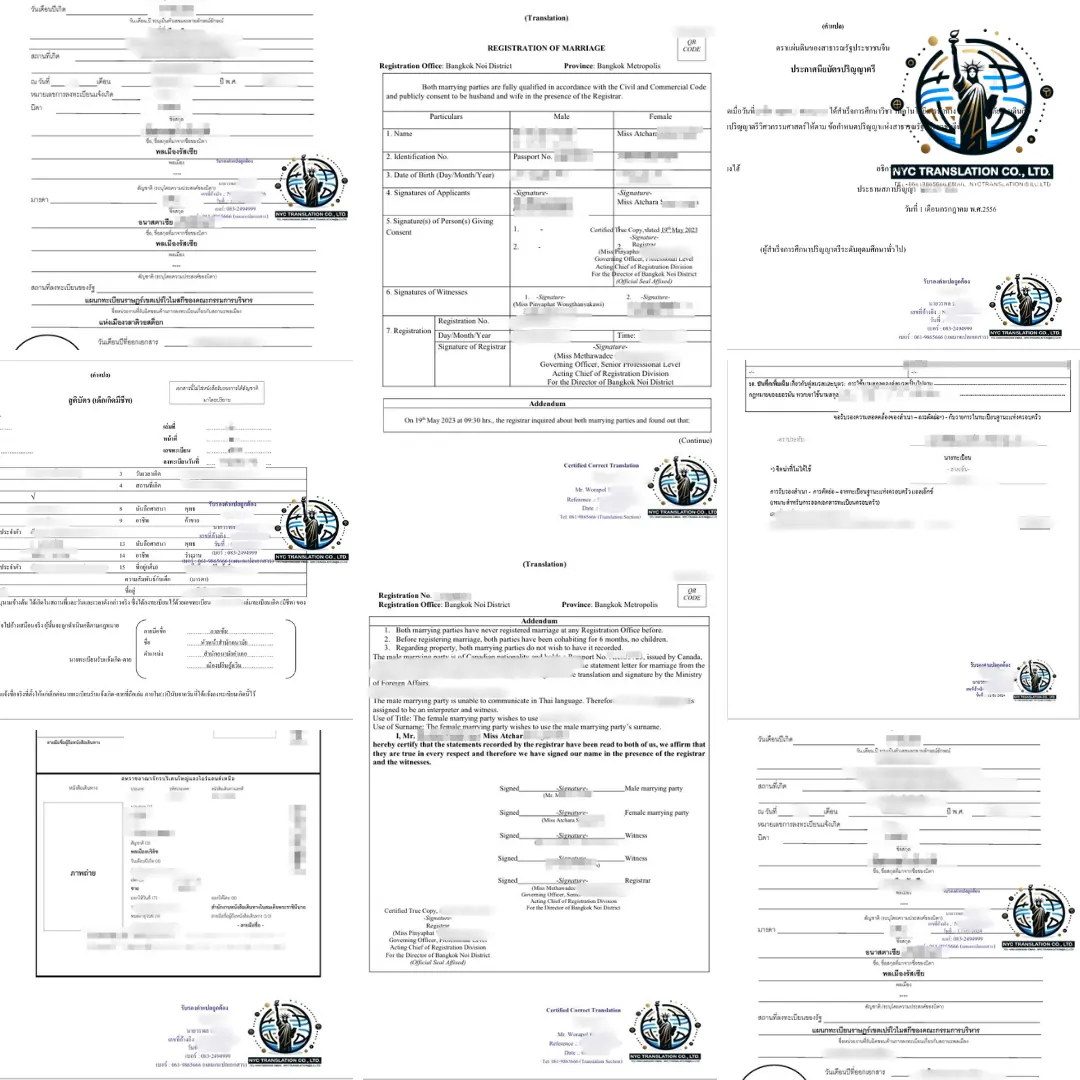
Yes. Every stamp, seal, signature block, marginal note and struck-through entry should be represented in the translation, with a bracketed description where the content is illegible. Reviewers compare the translation against the original element by element, and an unexplained omission is read as a discrepancy rather than as a tidy summary.
How is pricing calculated?
By page or word count, subject matter, language pair and turnaround, plus the actual government fees incurred at the legalisation and embassy stages. A line-by-line quotation is issued before work starts.
Which languages do you cover?
English, Chinese, Japanese, Korean, German, French, Spanish, Italian, Russian, Arabic, Vietnamese and Burmese among others. Where an authority accepts only certain languages, we translate into English as the pivot language and then into the target language as required.
What makes a translation 'certified' in Thailand?
Thailand has no single sworn-translator registry. Acceptance depends on the receiving authority: some accept a translator's certification or a Notarial Services Attorney's attestation, while documents used abroad normally require legalisation by the Legalisation Division, Department of Consular Affairs, Ministry of Foreign Affairs, and often a further attestation at the destination embassy.
What is the difference between a certified translation and an MFA-certified translation?
A certified translation is signed by the translator attesting the text matches the source. An MFA legalisation stamp from the Department of Consular Affairs is an official verification of that translation against the original, which most embassies and foreign authorities require. Confirm the level your receiving office needs before work starts so the file is not repeated.
คู่ภาษาที่ขอมากที่สุด: แปลไทย-อังกฤษ · แปลไทย-จีน · แปลไทย-ญี่ปุ่น · แปลไทย-เกาหลี · แปลไทย-เยอรมัน · แปลไทย-ฝรั่งเศส · แปลไทย-สเปน · แปลไทย-อิตาลี · แปลไทย-รัสเซีย · แปลไทย-อาหรับ · แปลไทย-เวียดนาม · แปลไทย-พม่า
ขั้นตอนรับรองและนิติกรณ์: นิติกรณ์กรมการกงสุล · legalization ถนนแจ้งวัฒนะ · รับรองเอกสารกระทรวงการต่างประเทศ · รับรองสถานทูต · notary รับรองคำแปล · certified true copy · apostille ประเทศไทย · แปลเอกสารส่งต่างประเทศ
ปลายทางการใช้งาน: แปลเอกสารยื่นวีซ่าออสเตรเลีย · แปลเอกสารยื่นวีซ่าอเมริกา · แปลเอกสารยื่นวีซ่าเชงเก้น · แปลเอกสารเรียนต่อ · แปลเอกสารจดทะเบียนสมรสต่างชาติ · แปลเอกสารขอสัญชาติ · แปลเอกสารทำงานต่างประเทศ · แปลเอกสารตั้งบริษัทต่างประเทศ