ข้ามไปเนื้อหาหลัก / Skip to main content
N
NYC Visa.
Visa & Translation
Work Experience Certificate · Phang Nga

Work Experience Certificate in Phang Nga

Work Experience Certificate service for clients in Phang Nga (postal 82xxx) — door-to-door pickup, certified translation, ministry/embassy/Apostille legalization with worldwide DHL delivery, by NYC Visa & Translation, Ladprao 95, Bangkok.

Quick Answer

Clients in Phang Nga can use Work Experience Certificate with NYC Visa & Translation via 3 channels: (1) send scans on LINE @nycv for a quote within 1 business hour (2) ship originals via EMS/Kerry to our Ladprao 95 office (1–2 days) (3) receive completed documents via DHL/EMS anywhere in Phang Nga. Standard 5–10 business days; Rush 24–72h available.

77
Provinces served
82xxx
Postal prefix
1–2
Days EMS to head office
99%+
Acceptance rate
About Phang Nga

Phang Nga is in Thailand's Southern region. Capital: Phang Nga. Postal prefix 82. อ่าวพังงา เขาตะปู เขาหลัก. NYC Visa & Translation covers every district of Phang Nga via EMS/Kerry/DHL — no need to travel to Bangkok.

Work Experience Certificate services available in Phang Nga

Social Security Contribution Certificate

Social Security Contribution Certificate + certified translation + Department of Labour Welfare / Ministry of Labour + MFA + destination embassy — for skilled migration, work visas and credential evaluation.

Employment History (SSO Sec.39/40)

Employment History (SSO Sec.39/40) + certified translation + Department of Labour Welfare / Ministry of Labour + MFA + destination embassy — for skilled migration, work visas and credential evaluation.

Department of Employment Certificate

Department of Employment Certificate + certified translation + Department of Labour Welfare / Ministry of Labour + MFA + destination embassy — for skilled migration, work visas and credential evaluation.

PND 1 / 50-bis Tax Withholding

PND 1 / 50-bis Tax Withholding + certified translation + Department of Labour Welfare / Ministry of Labour + MFA + destination embassy — for skilled migration, work visas and credential evaluation.

Salary Certificate

Salary Certificate + certified translation + Department of Labour Welfare / Ministry of Labour + MFA + destination embassy — for skilled migration, work visas and credential evaluation.

Position Certificate

Position Certificate + certified translation + Department of Labour Welfare / Ministry of Labour + MFA + destination embassy — for skilled migration, work visas and credential evaluation.

Service Letter from Employer

Service Letter from Employer + certified translation + Department of Labour Welfare / Ministry of Labour + MFA + destination embassy — for skilled migration, work visas and credential evaluation.

Skilled Worker Certificate (DSD)

Skilled Worker Certificate (DSD) + certified translation + Department of Labour Welfare / Ministry of Labour + MFA + destination embassy — for skilled migration, work visas and credential evaluation.

6-stage process for Phang Nga clients
  1. 1. Free case review (Phang Nga client)

    Tell us you're in Phang Nga, send scans on LINE @nycv or email contact@nycvisa.org — receive a full quote and timeline within 1 business hour.

  2. 2. Ship originals to Ladprao 95

    Use Thailand Post EMS (1–2 days from Phang Nga) or Kerry/Flash Express. Registered EMS recommended for security.

  3. 3. Translation + certification

    Certified translator + 2-stage QA (2–3 days). Languages: EN/CN/JP/KR/DE/FR/ES/RU/AR + NAATI.

  4. 4. Source ministry + MFA Consular

    MoJ / Medical Council / MoL / SSO / Civil Registrar + MFA + Apostille (3–7 days).

  5. 5. Embassy attestation (if required)

    Destination embassy (China, India, UAE, Vietnam) — 2–5 days.

  6. 6. Return shipment to Phang Nga

    DHL Worldwide / EMS to your address in Phang Nga in 1–3 days, with online tracking.

Frequently Asked Questions
Do I have to travel to Bangkok from Phang Nga?

No — fully online end-to-end. Clients in Phang Nga send scans via LINE/email, ship originals by EMS, and we return documents via DHL/EMS. Total time: 7–15 business days.

How long does EMS take from Phang Nga to our Ladprao 95 office?

1–2 business days for Phang Nga (postal 82xxx). Registered EMS recommended; tracking at thailandpost.co.th. Cost: THB 50–120.

Is Work Experience Certificate pricing different in Phang Nga vs Bangkok?

Same nationwide pricing — no surcharge for upcountry clients. Only added cost is actual EMS/DHL shipping (THB 200–500 total).

Payment methods for Phang Nga clients?

Bank transfer (Kasikorn / SCB / Bangkok Bank) / PromptPay / credit card / Stripe. 50% deposit on engagement, balance before shipment. Full receipts and tax invoices issued for every transaction.

Where is Work Experience Certificate from Phang Nga accepted?

Worldwide in 195 countries — including 125+ Hague Apostille member states (Thailand joined 14 Dec 2024). Non-member countries use embassy legalization chain.

Nearby provinces in the same region

Work Experience Certificate for Phang Nga clients — start today

Free consultation, replies within 1 business hour. No need to travel to Bangkok.

Service Knowledge Base

Work permits, BOI/IEAT privileges, Treaty of Amity and APEC card — practical answers

First-party answers on Thai work authorisation: the standard Department of Employment route, BOI and IEAT channels for skilled experts, US company rights under the Treaty of Amity, and the APEC Business Travel Card for Thai nationals — including which supporting documents must be translated and legalised first. (19+ search topics covered)

Can I start working while the application is pending?

Working before authorisation is granted exposes both the worker and the employer to penalties under the foreigners' working management law. The safe course is to agree a start date conditional on issuance, and to keep the employment contract, the position description and the employer's registration documents consistent with what was filed, since discrepancies between the contract and the filing are a frequent cause of rejection.

What happens to the permit if I change employer or job title?

Authorisation is granted by reference to the employer, workplace and described duties, so a change in any of them normally requires a filing rather than a private arrangement. Continuing to work under the old permit after the change is treated as unauthorised work. Plan the change with the new employer before resigning, because the gap between employments also affects the underlying permission to stay.

How are foreign degrees and experience letters used for a Thai work permit?

They are normally authenticated by the competent authority in the issuing country and by the Royal Thai Embassy there, or by apostille once the Convention enters into force for Thailand on 28 February 2027 where accepted, then translated into Thai and legalised by the Department of Consular Affairs. Experience letters should state the position, exact dates, duties and the issuer's contact details, because verification enquiries do occur. Confirm the document list with the Department of Employment or the receiving office before preparing the file.

What must be done when changing employer or job title?

A work permit is tied to the conditions recorded in it, including employer, position and place of work, so material changes must be notified or amended under the applicable law before working under the new conditions. Changing employer also usually affects employment-based permission to stay, so the two processes should be planned together. Typical documents are a letter from the new employer, corporate registration papers and the new employment contract; verify the current procedure with the Department of Employment.

Why are Thai work permit applications commonly returned?

The usual reason is that the job title and duties in the application do not match the employer's supporting documents, such as the company affidavit, financial statements and employment contract. Other frequent causes are qualifications claimed without properly certified translations, and applying under a business activity that is not among the objectives registered with the Department of Business Development. Map every document to the same set of facts before filing and confirm the current requirements with the Department of Employment office responsible for the workplace.

Is a work permit the same as a visa in Thailand?

No. A visa such as Non-Immigrant B is issued by a Thai embassy or consulate, extensions of stay are approved by the Immigration Bureau, while the work permit itself is issued by the Department of Employment under the Emergency Decree on Managing the Work of Aliens B.E. 2560 (2017). Holding a valid visa does not by itself authorise employment, and working before authorisation carries legal penalties, so both tracks must be planned together.

Must authorisation be obtained before starting work?

Yes. A foreign national must hold the permit before performing work, and may only do the role, for the employer and at the locations stated in the permit. Trial periods and side assignments outside that scope are not covered. Changes of employer, position or workplace require notification or amendment through the Department of Employment.

How are foreign degrees and experience letters handled?

They usually must be translated into Thai or English as required and legalised through the diplomatic chain: certified in the issuing country (apostille where that country is a Convention party), then endorsed by the Royal Thai Embassy, or endorsed by that country's embassy in Thailand and then legalised by the Legalization Division of the Department of Consular Affairs before submission.
Topics covered
หน่วยงานที่เกี่ยวข้อง: กรมการจัดหางาน (DOE) · สำนักงานคณะกรรมการส่งเสริมการลงทุน (BOI) · การนิคมอุตสาหกรรมแห่งประเทศไทย (กนอ./IEAT) · กรมพัฒนาธุรกิจการค้า (DBD) · สำนักงานตรวจคนเข้าเมือง (ตม.) · กรมการกงสุล กระทรวงการต่างประเทศ
คำค้นหลัก: ขอใบอนุญาตทำงานคนต่างชาติ · work permit thailand requirements · BOI work permit e-Expert · one stop service center visa work permit · IEAT work permit นิคมอุตสาหกรรม · treaty of amity company registration · บัตรเอเปค APEC Business Travel Card
เอกสารที่มักต้องแปล/รับรอง: ปริญญาบัตร/ทรานสคริปต์ · หนังสือรับรองประสบการณ์ทำงาน · ใบอนุญาตประกอบวิชาชีพ · หนังสือรับรองบริษัทต่างประเทศ · หนังสือมอบอำนาจ (Power of Attorney) · ทะเบียนสมรส/สูติบัตรของผู้ติดตาม
Official references

Need your documents reviewed or your case assessed? Ask our team by phone, LINE, or email. We reply during business hours (Mon–Fri 9:00–18:00, Sat 9:00–15:00, ICT).
Staff advising a client on the documents required
Staff advising a client on the documents requiredFrom actual casework by the NYC Visa & Translation team
Service Playbook

Thai work permit — company-side and employee-side documents

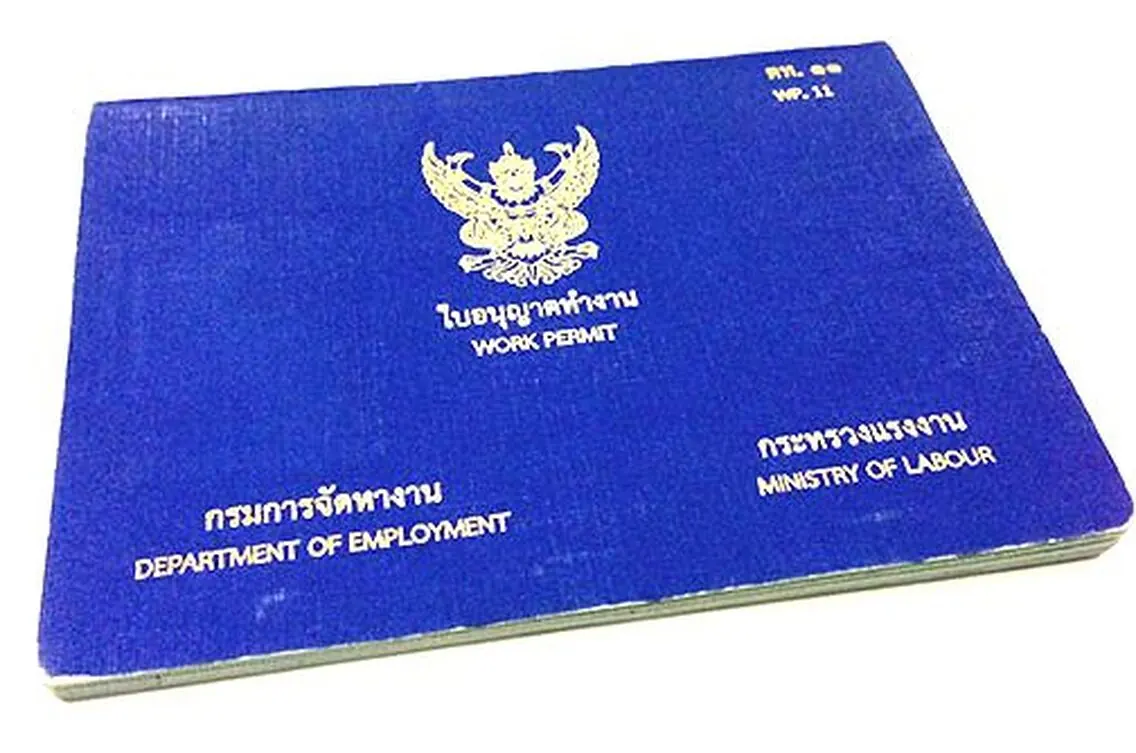
Work permits are issued by the Department of Employment and are tied to the employer, position and workplace. Changing job, role or location requires a new filing.

Documents to prepare

  • Company side: current affidavit, shareholder list, financial statements, social security filings
  • Employee side: passport, the correct visa category, and the required medical certificate
  • Degrees and experience letters, legalised at source and translated for Thai use
  • Employment contract and job description
  • Workplace map and photographs where requested
  • Power of attorney for the company's filing agent

Step-by-step process

  1. 1. Check company and role eligibility Registered capital, Thai-to-foreign staff ratio and reserved occupations are verified first.
  2. 2. Prepare foreign documents Qualifications and experience letters must be legalised abroad and translated before filing.
  3. 3. File the application Through the Department of Employment, or a dedicated channel such as the BOI One Stop Service.
  4. 4. Collect and comply Work only within the stated role and location, and renew before expiry.

Pitfalls and rejection causes

  • Working outside the stated role or location breaches the permit conditions.
  • A permit belongs to the employer — it cannot follow you to a new company.
  • Visa and permit expire on different dates; track both.
  • Company documents older than the accepted window must be reissued.

Tips from our team

  • Set reminders at least 45 days before either expiry date.
  • Maintain a standing company document pack to speed up future filings.
  • BOI-promoted companies should use the dedicated channel to cut steps.

Prefer not to handle the queues yourself, or worried about a rejection? Send us photos of your documents for a free pre-check. We handle the full chain — obtaining certified copies, translation, certification and submission — and keep you updated at each step. Reach us on LINE, phone or email during business hours.

Route Comparison

Comparing Thai work permit routes

Different employer types use different channels, and each channel pairs with a different visa category.

RouteWhen to useCertifying authorityApprox. durationRejection risk
Standard filing with the Department of EmploymentThe employer is an ordinary Thai company without BOI promotionDepartment of Employment, Ministry of LabourVariable, driven by how complete the employer's file isThai-to-foreign staff ratios and registered capital not meeting thresholds is the common refusal ground
BOI-promoted company channelThe employer holds a promotion certificate and the position is on the approved listBOI together with the Immigration Bureau and Department of EmploymentGenerally faster than the standard route, still variableA position that differs from the approved list requires an amendment first
Conditional or short-term work authorisationShort assignments or job types covered by specific published rulesDepartment of Employment under the notification in forceShorter than a full applicationWorking beyond the authorised scope is an offence even when a permit exists

Timelines above are practical estimates from live casework and can change with each authority's policy; confirm with the receiving authority before booking travel. If you would rather not test routes by trial and error, our advisers can assess which route fits your case.

Advisory Service

We do not just process documents — we advise you through the whole case

Our team has worked on cross-border documents, certified translation and government liaison for over 15 years. Most rejections we see are not caused by missing paperwork but by choosing the wrong route on day one, so we always start with a case assessment.

Route assessment

We look at your destination, purpose and deadline, then tell you which certification route applies — and which steps you can skip.

Pre-submission review

Name spelling, consistency across documents, document age and translation format are checked before anything reaches a counter.

Timeline planning

We sequence the steps around your appointment or travel date and flag bottlenecks in advance.

Rejection recovery

We read the refusal reasons, identify the underlying cause, and plan a resubmission that answers what the authority asked for.

Rather not learn by trial and error? Send your case details and document photos for a review — reach us on LINE, phone or email during business hours.

Practical Q&A

Practical questions · Near me / DIY / Required documents

Is there a service point near me?

Our main offices are Lat Phrao 95 (Bangkok), Khon Kaen and Udon Thani. We serve the whole country through scans and document courier, and can meet at city rail stations or malls. Ask our team by phone, LINE or email for the most convenient option.

Can I handle this myself?

Many steps can be done personally under the relevant authority's rules. What usually costs time is the wrong sequence, a translation format that does not match the requirement, or a source document version the recipient will not accept. Check the destination checklist before starting and ask us if anything is unclear.

Which documents should I prepare?

Generally the original document from the competent authority, the owner's ID or passport, a translation in the format the destination requires, and a power of attorney if someone acts for you. Details vary by service type — ask our team for a case-specific checklist.
Practical advice & cautions

Legalization & apostille: practical advice and cautions

Before you start
  • Get the receiving party's requirements in writing

    Universities, employers and registry offices publish their own checklists. Obtaining that checklist first fixes the number of copies, the language and the certification route correctly on the first attempt.

  • Check whether the destination is an Apostille Convention party

    For member states the chain ends with an apostille and no embassy step is needed. For non-member states the document must continue through the destination country's embassy. Verify the current member list on the HCCH website.

  • Prepare translations in the format the certifying office actually uses

    The Department of Consular Affairs certifies translations presented in its expected format. Self-formatted translations are frequently sent back for correction, costing a full queue cycle.

  • Keep a scanned backup at every stage

    Photograph or scan every page before submission and again after each stamp, so you have a reference if a document is lost in transit.

Common reasons documents get rejected
  • Ignoring the required translation language

    Some countries accept only translations into their own official language, not English. Certifying an English translation first can mean repeating the entire chain.

  • Certifying a copy that no longer matches the register

    If a registry entry changes after the copy was issued, for example a name change or address move, the certified copy will contradict the database. Re-issue before starting.

  • Assuming a Thai lawyer is a common-law notary public

    Thailand has no common-law notary public. The equivalent role is a Notarial Services Attorney registered with the Lawyers Council of Thailand. Describing it incorrectly can cause the receiving party to reject the document.

  • Mixing both routes

    Requesting an apostille and an embassy legalization at the same time when only one is required wastes time and can raise questions at the destination. Pick the single route that matches the destination's convention status.

Requirements differ by authority and destination country and can change. Confirm current conditions with the receiving authority, or ask our team by phone, LINE or email.

What people search for

Frequently searched topics about legalisation

Correct order of certification steps
The usual chain is original → translation → legalisation → destination embassy attestation where required.
Foreign documents for use in Thailand
They must first be certified in the issuing country, then translated and legalised in Thailand.
Company documents for overseas use
Obtain a recent certified extract of company records before beginning translation and legalisation.
Legalisation by the Department of Consular Affairs
Document legalisation in Thailand is handled by the Legalization Division, Department of Consular Affairs, MFA.

These topics reflect the rules and practice of the relevant authorities and can change. Confirm with the receiving authority, or ask our team by phone, LINE or email.

Related services

What clients usually handle next

One document set often moves through several stages — translation, notarial certification, legalization and finally a visa filing. The links below follow that real sequence.

External authority references

Authority requirements change. Verify with the receiving authority before filing, or ask our team by phone, LINE or email.