ข้ามไปเนื้อหาหลัก / Skip to main content
N
NYC Visa.
Visa & Translation
🏕️ วีซ่าทำงาน + ท่องเที่ยว (Working Holiday)

Working Holiday VisaFiled worldwide

Working Holiday Visas open temporary jobs for Thais aged 18–30 (35 in some countries) — Australia 417, New Zealand WHV, Japan WHV, Korea H-1, Canada IEC via RO. NYC handles registration, police clearance, and medical.

Key Facts
Category
วีซ่าทำงาน + ท่องเที่ยว (Working Holiday)
Visa duration
12 เดือน (ต่อได้ในออสเตรเลีย)
Service fee
contact our team
Top destinations
8+ countries
Recommended lead time
3–6 weeks
Document Checklist
Passport valid 12+ months
Statement of AU$5,000 + return ticket
Police clearance + medical
Language certificate (Korea, Japan)
Top Destinations

NYC files working holiday visa for every continent. The most-filed routes are listed below.

Best For
Recent graduatesGap year travellersBackpackersCareer builders
Insider Tips
Track Thai quotas yearly (Korea H-1, Canada IEC)
Police clearance is valid 6 months

Start your Working Holiday Visa today

Free consultation. Document review within 24 hours by a category specialist.

Related Categories

Choosing a visa document service for travel abroad

A visa outcome is the consulate's discretion, so judge a provider on process, not promises. Reliable providers state the current published requirements of your destination, prepare a file that matches them, explain what happens if the consulate asks for more, and never claim guaranteed approval. Anyone promising a result is describing something they do not control.

How to evaluate a provider

  • Cites the destination's published requirementsRequirements change; the file must match the current official notice, not last year's checklist.
  • No guaranteed-approval claimsApproval is at the consulate's discretion and cannot be contracted for.
  • Explains the additional-documents scenarioRequests for more evidence are routine and need a response plan.
  • Separates government fees from service feesConsular fees are payable regardless of who prepares the file.
  • Keeps your data and originals traceableVisa files contain financial and identity documents that need documented handling.

Questions to ask before you commit

  1. Which official notice are you basing my checklist on, and when was it published?
  2. If the consulate asks for extra documents, what is your process and timeline?
  3. How many working days does it actually take, counted from a complete file?
  4. If the receiving authority rejects or asks for changes, do you correct it, and under what terms?
  5. How can I track status, and who physically holds the original documents?

Your options, and who each suits

OptionBest forWhat to know
Apply yourselfStraightforward profiles with complete documentationYou carry the burden of tracking requirement changes and appointment slots.
Document-preparation serviceApplicants with complex financial or employment evidenceConfirm whether appointment booking is included in the scope.
Full handling including appointmentsFamilies and deadline-bound travelBiometrics and interviews still require the applicant in person.

FAQ on choosing a provider

Which visa service is recommended, and how do I avoid a bad one?
Choose a provider that cites the destination's current published requirements, separates consular fees from its own, and explains how it responds if extra documents are requested. Avoid anyone offering guaranteed approval, since the decision belongs to the consulate.
Does using an agent improve my chance of approval?
An agent cannot influence the decision. What a good agent does is make sure the file is complete, internally consistent and formatted the way the consulate expects, which removes the avoidable reasons for refusal.

แหล่งอ้างอิงทางการ · Authoritative Sources

  1. Thai Ministry of Foreign Affairs
  2. Consular Affairs
  3. Thailand BOI LTR Visa
  4. Department of Employment
Service Knowledge Base

Choosing the right visa category for your purpose

How tourist, long-stay, retirement, remote-work (DTV), residence-by-investment, working holiday and electronic travel authorization routes differ — and which Thai documents must be certified-translated and legalized before filing. Grounded in Thai MFA and Immigration Bureau notices and the destination country's official sources. Rules change; always verify on the official site before filing. Fees: please ask our staff by phone, LINE or email. (13+ search topics covered)

Will a refusal from one country affect applications elsewhere?

Many application forms ask directly about previous visa refusals, and concealing one is a misrepresentation — treated far more seriously than the original refusal. Declare it accurately and show what has changed since: stronger financial evidence, clearer ties to Thailand, or an itinerary that matches the supporting documents. The final decision always remains with the issuing authority.

How do I choose the right visa category?

Start from what you will actually do, not from whichever visa is easiest to obtain, because carrying out activities outside the granted category can breach the conditions of stay. Then settle three questions: how long you need to remain, whether you will work or receive payment, and whether dependants travel with you. Those three usually narrow the field to one or two categories, after which you compare the documentary and financial conditions published by the issuing authority.

I was refused a visa before. How should I reapply?

Disclose the previous refusal truthfully on the new form; concealment is a misrepresentation and is treated far more seriously than the original refusal. Read the refusal notice, address its stated ground directly — stronger ties to Thailand, an explanation of the source of funds, or a consistent travel plan — and file again with materially changed evidence. The outcome remains at the discretion of the deciding officer.

What documents are usually required from abroad for these programmes?

Typically a police clearance certificate, proof of funds or income, health or insurance evidence, and civil-status documents such as marriage or birth certificates when dependants are included. Documents issued abroad normally need certification in the issuing country, attestation by the Royal Thai Embassy or Consulate-General there, a Thai translation, and legalisation at the Legalization Division of the Department of Consular Affairs. Building that chain takes longer than the application itself, so start with the documents.

Are golden visa / residence-by-investment programmes reliable?

Such programmes exist in several countries, but qualifying investments, conditions and even the continued existence of a route change with each country's domestic law, and several states have tightened or closed channels. Verify directly with the country's official authority before committing, and treat any promise of guaranteed approval as a red flag — no agent can give that.

Can I file by myself instead of using an agent?

Yes — every official channel is open to direct applicants. The value of representation is completeness checks, sequencing translation, legalization and appointments against your deadline, and avoiding rejection for formatting. It is not faster processing and never a guarantee of outcome, which remains entirely at the issuing authority's discretion.

Do document validity periods matter when legalizing paperwork?

Yes. Police clearance certificates, medical certificates and civil-registry extracts are often accepted only if issued within three to six months of submission. Completing translation and legalization too early can leave you with an expired document at filing. Work backwards from your intended filing date when sequencing translation, MFA legalization and embassy attestation.

What should I check before joining a residence-by-investment programme?

Three things. First, the programme's current legal status, since several states have amended or closed such schemes by decree. Second, the tax consequences of acquiring residence, including interaction with Thai taxation and any double-tax agreement. Third, the maintenance conditions — minimum physical presence and continued holding of the qualifying investment. Rely only on the official publications of the country concerned.
Topics covered
วีซ่าพำนักระยะยาว: Non-O-A · O-X · LTR · DTV · วีซ่าเกษียณ
อนุญาตเดินทางล่วงหน้า: ESTA · eTA แคนาดา · UK ETA · ETIAS
เอกสารประกอบ: แปลรับรอง · นิติกรณ์กรมการกงสุล · หนังสือรับรองความประพฤติ · ใบรับรองแพทย์
Official references

Need your documents reviewed or your case assessed? Ask our team by phone, LINE, or email. We reply during business hours (Mon–Fri 9:00–18:00, Sat 9:00–15:00, ICT).

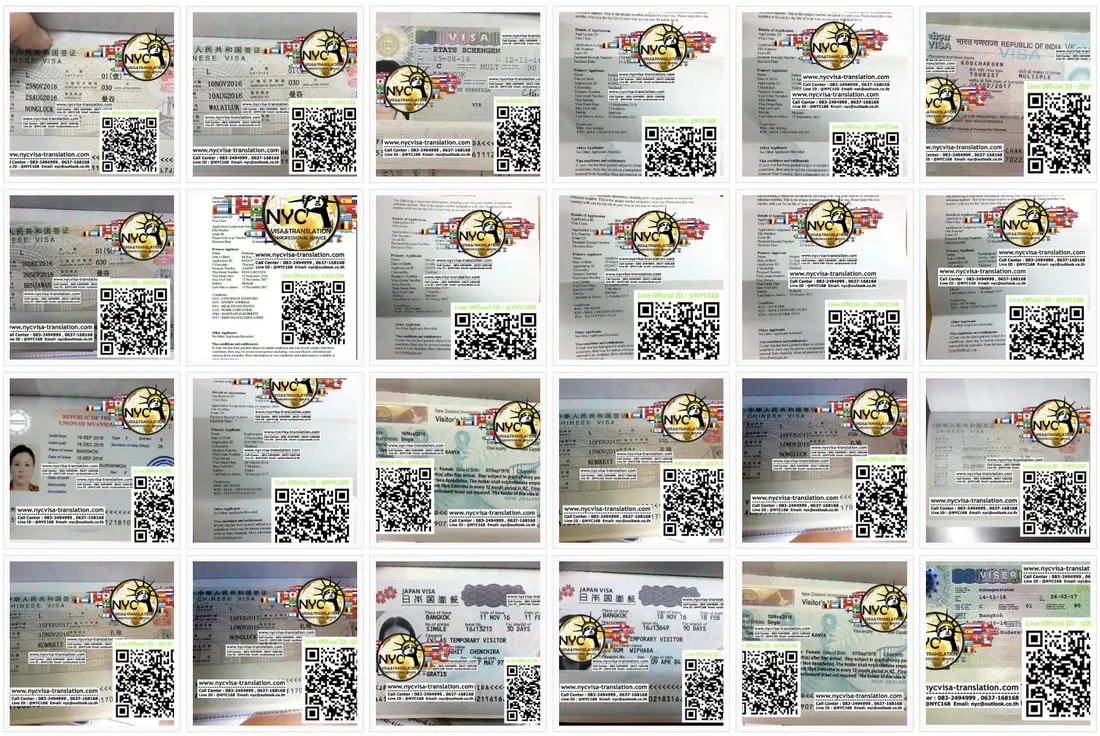
Example of a long-stay visa obtained by an applicant
Example of a long-stay visa obtained by an applicantFrom actual casework by the NYC Visa & Translation team
Service Playbook

Long-stay and special visa programmes — choosing the right one

Each long-stay programme has its own eligibility rules, financial evidence and deciding authority. Choosing the wrong programme at the start wastes both time and non-refundable fees.

Documents to prepare

  • Passport with the validity the programme requires
  • Financial evidence meeting the programme threshold (balances, recurring income, assets)
  • Health insurance meeting the required coverage
  • Evidence of the specific qualification: employment contract, degree, or investment proof
  • Police clearance certificate where the programme requires it

Step-by-step process

  1. 1. Screen eligibility Compare income, age, occupation and purpose against each programme before committing.
  2. 2. Build the financial file Prepare the required look-back period and make the source of funds explainable.
  3. 3. Legalize foreign documents Documents issued abroad must be certified at origin before Thai translation and certification.
  4. 4. File and monitor Submit through the programme's system and answer any follow-up within the deadline.
  5. 5. Post-approval compliance Complete reporting, renewals and any ongoing conditions.

Pitfalls and rejection causes

  • Large unexplained deposits shortly before filing are the most common trigger for extra document requests.
  • Insurance below the required coverage makes the application incomplete even if everything else is present.
  • Programme criteria are revised periodically — confirm current rules before each filing.

Tips from our team

  • Have eligibility assessed before paying any non-refundable fee.
  • Show a pattern of income, not just a closing balance.
  • Keep the certified bundle for renewals.

Prefer not to handle the queues yourself, or worried about a rejection? Send us photos of your documents for a free pre-check. We handle the full chain — obtaining certified copies, translation, certification and submission — and keep you updated at each step. Reach us on LINE, phone or email during business hours.

Route Comparison

Comparing Thailand's long-stay visa programmes

Each long-stay programme tests a different qualification set and grants different work and dependant rights.

RouteWhen to useCertifying authorityApprox. durationRejection risk
Long-Term Resident (LTR) visaYou fit one of the official target groups, such as skilled professionals or steady-income residentsBOI together with the Immigration BureauVariable — allow time for qualification and financial document reviewDiscontinuous or uncertified income records are the main cause of slow assessment
Privilege long-stay membership programmeYou want concierge-style convenience and do not intend to work in ThailandThe government-appointed programme operatorVariable by qualification review cycleA right to stay is not a right to work — the work permit is a separate matter
Annual extension on ordinary grounds (retirement, family, employment)You meet the published annual extension criteriaImmigration BureauVariable — renew each cycle and report as scheduledMissing a reporting deadline or seasoning period on deposits fails the renewal

Timelines above are practical estimates from live casework and can change with each authority's policy; confirm with the receiving authority before booking travel. If you would rather not test routes by trial and error, our advisers can assess which route fits your case.

Advisory Service

We do not just process documents — we advise you through the whole case

Our team has worked on cross-border documents, certified translation and government liaison for over 15 years. Most rejections we see are not caused by missing paperwork but by choosing the wrong route on day one, so we always start with a case assessment.

Route assessment

We look at your destination, purpose and deadline, then tell you which certification route applies — and which steps you can skip.

Pre-submission review

Name spelling, consistency across documents, document age and translation format are checked before anything reaches a counter.

Timeline planning

We sequence the steps around your appointment or travel date and flag bottlenecks in advance.

Rejection recovery

We read the refusal reasons, identify the underlying cause, and plan a resubmission that answers what the authority asked for.

Rather not learn by trial and error? Send your case details and document photos for a review — reach us on LINE, phone or email during business hours.

Practical Q&A

Practical questions · Near me / DIY / Required documents

Where do I lodge a visa application — must I go to the embassy?

Many countries outsource intake to visa application centres (VFS Global, TLScontact, BLS) with offices in Bangkok and some provinces; others accept lodgement at the embassy or fully online. Channels change by embassy announcement, so confirm the current route before booking. We can pre-check your document set and arrange appointments from any of our three offices.

Can I apply myself, or do I need an agency?

You can always apply yourself; no country requires an agent, and no agent can guarantee approval because the decision is at the consular officer's discretion. The value of assistance is assembling the file exactly to the official checklist, correct translation and certification format, and a focused cover letter.

What are the baseline documents?

Typically a passport with the validity and blank pages the destination requires, the completed application form, photos to the destination's specification, financial evidence for the stated period, proof of employment or study, travel and accommodation plans, and health insurance where required. Always follow that embassy's official checklist, as requirements differ by country.
Practical advice & cautions

Visa and immigration matters: advice and cautions

Before you start
  • Check passport validity and blank pages

    Many countries set a minimum remaining validity and number of blank pages. Verify before your appointment.

  • Keep every receipt and acknowledgement

    Photograph all filing receipts and stamps; they are key evidence in any later verification.

  • Order documents to the authority's checklist

    Assembling the bundle in the required order with an index speeds up assessment and reduces requests for more documents.

  • Plan around expiry dates

    Extensions, reporting and re-entry permits should be handled well ahead of the deadline; queues and public holidays can make last-minute filing impossible.

Common reasons documents get rejected
  • Expired supporting documents

    Civil registry extracts, medical certificates and police clearances have limited validity; old copies make the bundle incomplete.

  • Refiling immediately without fixing the cause

    Analyse the refusal grounds and address them; resubmitting the same file usually produces the same result.

  • Form data contradicting the attachments

    Dates, addresses or travel history that conflict with supporting documents are a frequent refusal ground and may be read as misrepresentation.

  • Ignoring post-approval obligations

    Periodic reporting, address notification and work conditions are ongoing duties that affect the next extension.

Requirements differ by authority and destination country and can change. Confirm current conditions with the receiving authority, or ask our team by phone, LINE or email.

What people search for

Frequently searched topics about visas and immigration

Documents required for a visa application
Checklists are set by the embassy or receiving authority; always follow their current published notice.
Extensions and periodic reporting
Long-stay holders must report at the intervals set by the Immigration Bureau.
Notification of residence for foreign nationals
House owners or occupiers must notify the stay of foreign nationals under Thai immigration law.
Refusal and reapplication
Read the stated reason first and address the actual cause rather than resubmitting the same file.

These topics reflect the rules and practice of the relevant authorities and can change. Confirm with the receiving authority, or ask our team by phone, LINE or email.

Related services

What clients usually handle next

One document set often moves through several stages — translation, notarial certification, legalization and finally a visa filing. The links below follow that real sequence.

External authority references

Authority requirements change. Verify with the receiving authority before filing, or ask our team by phone, LINE or email.